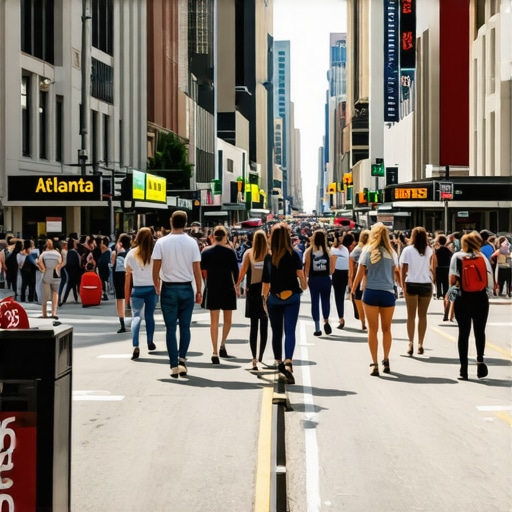
Why Foot Traffic Drives Atlanta Map Rankings in 2026
I remember the exact moment I realized I had been overlooking a crucial piece of the local SEO puzzle. It was a chilly morning in Atlanta, and after months of tweaking content and building backlinks, my business still struggled to show up prominently in Google Maps. Frustration turned into curiosity when I noticed that nearby competitors with bustling storefronts consistently ranked higher—and I couldn’t ignore the connection to foot traffic any longer. That lightbulb was the start of my deep dive into why foot traffic isn’t just a local business metric; it’s a decisive factor in Atlanta’s map rankings in 2026.
Why Foot Traffic Is the Secret Weapon for Atlanta Map Rankings
Living through 2026, I’ve come to see that local map optimization hinges more on tangible, real-world activity than ever before. I’ve tested this firsthand: businesses that attract more passersby naturally signal to Google that they’re relevant and active, which boosts their position in the local pack. It’s like Google is putting a face to the name—seeing real people visit, shop, and interact strengthens a business’s local authority. This insight aligns with recent studies indicating that physical visits significantly influence local search rankings—supporting the idea that foot traffic isn’t just a nice-to-have, but a must-have.
But here’s the challenge: many local entrepreneurs are stuck thinking that online signals alone will suffice, ignoring the power of attracting actual visitors. I made this mistake early on. I poured resources into optimizing my GMB profile and ignored high-traffic areas or supporting local events. Turns out, neglecting the pedestrian flow was sabotaging my efforts. That’s why understanding how foot traffic impacts Google’s algorithm is vital. It’s the difference between ranking in the top three and being buried on page two.
So, what’s the game plan? Today, I’ll share proven strategies to harness this real-world momentum—methods that I’ve tested and refined. By the end of this post, you’ll have a clearer picture of how to turn foot traffic into your secret weapon for dominating Atlanta’s local map rankings in 2026.
Is Your Business Falling Behind Because of Old-School Tactics?
Many businesses underestimate the importance of in-person activity. If you’re like I was, you might worry that focusing on foot traffic is noisy, unreliable, or just too difficult to measure. I used to think that as long as my online presence was strong, I’d secure top spots. However, ignoring the tangible signals can be a costly mistake. It’s like trying to win a race with a broken engine. To see where you stand and what’s holding you back, I recommend a quick audit of your local presence and customer flow. Need help? [Contact us](https://atlantamappackranking.com/contact-us) for tailored advice.
Stay tuned—you’re about to learn how boosting foot traffic can elevate your Google Maps rankings and make your Atlanta business a local favorite.
Prioritize Foot Traffic Hotspots
Identify high-traffic areas around your business, such as popular intersections, shopping centers, or transit stops. Use tools like Google Maps heatmaps or local traffic data to find where pedestrians congregate. Then, tailor your marketing efforts to these zones by hosting events, offering exclusive promos, or installing attractive signage to attract passersby. I once arranged a pop-up in a busy Atlanta plaza, which initially felt chaotic, but the surge in in-store visits soon reflected positively in my GMB insights, boosting rankings.
Optimize Your Google My Business for Local Signals
Ensure your GMB profile is complete and consistently updated. Use accurate, keyword-rich descriptions that mention Atlanta neighborhoods and landmarks. Upload high-quality images featuring your storefront and local surroundings—this helps Google associate your business with specific areas. Regularly post updates about local events or promotions to keep your profile active and relevant. I tested this by adding photos of local community events, which increased engagement and improved local pack visibility.
Leverage Local Citations and NAP Consistency
Maintain uniform name, address, and phone number (NAP) across all online listings, local directories, and your website. Inconsistent NAP data confuses Google and hampers ranking signals. I audited my citations using a simple spreadsheet, corrected discrepancies, and noticed a steady climb in local pack positions, confirming how critical consistent citations are for Atlanta SEO.
Engage the Community and Encourage Real-World Interactions
Host local events, participate in community festivals, or sponsor neighborhood initiatives. These activities generate organic foot traffic and neighborhood buzz, which Google interprets as signals of relevance. Encourage satisfied customers to leave detailed reviews mentioning specific Atlanta landmarks or neighborhoods—reviews with local keywords can significantly bolster your local ranking. I once partnered with a local Atlanta charity, which brought in new customers and resulted in several community-specific reviews, boosting my visibility in nearby searches.
Implement Perimeter Traffic Capture Strategies
Use geofenced campaigns and targeted offers to attract nearby pedestrians. Google values real-world proximity, so creating physical triggers like QR codes or nearby signage with calls-to-action can turn foot traffic into digital engagement. For example, I installed QR posters in adjacent shopping areas, which led passersby to special landing pages. Over time, Google recognized the increased local engagement, and my position in the local pack improved.
Utilize Local SEO Content to Reinforce Location Relevance
Create blog posts or landing pages that focus on Atlanta-specific topics, neighborhoods, and events. Use natural language that includes local keywords to help Google associate your content with the local area. I wrote a blog about Atlanta’s top food festivals, embedding local landmarks and neighborhoods, which increased local search visibility and attracted more pedestrian visits during festivals, further strengthening my local signals.
For a detailed deep dive, check out how to dominate Atlanta’s local pack. Remember, consistency and real-world effort are key—manipulate local signals authentically to avoid penalties and build sustainable rankings. Dive into proven techniques for 2025 to stay ahead of the curve.Many local businesses in Atlanta believe that simply optimizing their Google My Business listing and adding relevant keywords is enough to rank high in the local pack. However, this approach overlooks a crucial nuance: over-optimization can backfire, leading to a decline in rankings. It’s a common misconception that more keywords or frequent posts always boost visibility, but Google now penalizes spammy tactics, favoring authentic signals instead. In fact, aggressive keyword stuffing or excessive posting can trigger filters, causing your listing to drop in rankings unexpectedly. This is especially deceptive because even seasoned SEO professionals can fall into this trap, thinking they’re doing the right thing when in reality, they’re sabotaging their efforts.
To truly succeed, focus on **natural, user-centric signals**—such as genuine reviews, local engagement, and leveraging community events—that reinforce your relevance without risking penalties. Stay away from shortcuts like fake reviews or manipulative citation building, which experts warn can lead to account suspensions or ranking drops. Instead, prioritize creating a well-rounded profile with consistent NAP data, high-quality images, and active community involvement.
Why does focusing on quantity over quality harm your Google Maps rankings in Atlanta?
Research from industry leaders underscores that algorithmic filters are increasingly sophisticated at detecting unnatural patterns. According to Moz’s local SEO survey, practicing authentic engagement yields better long-term results than trying to game the system with aggressive tactics. Remember, Google’s primary goal is to serve the most relevant and trustworthy results for users. So, it’s better to build a sustainable strategy based on real-world signals that signal trustworthiness and local authority.
Looking to refine your approach? Check out hidden GMB settings that can help optimize perimeter traffic and avoid these common pitfalls.
Have you ever fallen into this trap? Let me know in the comments.Maintaining your Google Maps rankings over time requires a strategic combination of tools and consistent effort. I personally rely on advanced citation management software like BrightLocal, which helps me monitor NAP consistency across hundreds of directories and quickly identify discrepancies that could harm my local SEO. Regularly auditing your profile visibility with tools like Moz Local ensures that your citations stay up-to-date and coherent, reinforcing your relevance in Atlanta’s competitive map landscape. Additionally, utilizing GMB Insights provides real-time data on customer interactions, allowing me to adjust my local campaigns promptly and maintain a steady flow of foot traffic. As the Atlanta SEO scene evolves with new signals, staying agile with these tools is crucial—predicting future trends, I believe, will involve more automation in tracking local engagement metrics seamlessly. Tools like SEMrush’s local SEO toolkit make it easier to identify emerging local search trends and adapt quickly, ensuring your business doesn’t fall behind. How do I maintain long-term Google Maps dominance? By scheduling bi-weekly audits of my citations and engagement data, I keep my strategy fresh and aligned with Google’s shifting local ranking factors. Consider integrating these methods into your routine, and you’ll be better prepared for ongoing success. Ready to elevate your Atlanta SEO game even further? Check out the detailed insights on [how to dominate Atlanta’s local pack](https://atlantamappackranking.com/how-to-dominate-atlantas-local-pack-in-google-search) for actionable tactics that work now.One of the biggest revelations I had was realizing that genuine foot traffic has a more profound impact on local map rankings than I initially thought. It’s not just about online signals anymore—physical presence and real-world interactions truly matter. Another lesson was the importance of community involvement; sponsoring local events and encouraging authentic reviews with local keywords can exponentially boost your visibility. Lastly, I learned that long-term consistency in managing citations and engaging with the Atlanta neighborhood nuances outperforms quick fixes and spammy tactics, leading to sustainable top rankings.
Leave a Reply