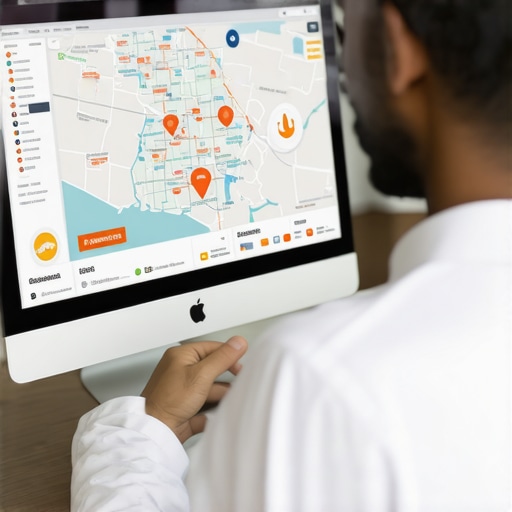
Top Local Pack Strategies in Atlanta for Dominating Google Maps Rankings in 2025

Top Local Pack Strategies in Atlanta for Dominating Google Maps Rankings in 2025

Have you ever felt that sinking frustration when your business isn’t showing up on Google Maps, despite investing time and resources into your marketing? I remember the exact moment I realized I was missing out on local customers because my Google My Business listing was buried in the rankings. It was a lightbulb moment that changed everything. And trust me, if you’re not actively working on your local pack visibility in Atlanta, you’re leaving money on the table.

Why Local Pack Visibility Matters More Than Ever

In 2025, the importance of ranking in the local pack can’t be overstated. Over 70% of consumers who perform a local search visit a store within 24 hours, and many of those visits happen directly from Google Maps. Being in the top spot means more foot traffic, more calls, and ultimately, more revenue. But with fierce competition in Atlanta, simply having a listing isn’t enough. You need to master specific strategies that push you ahead of the pack.

Is Local Pack Optimization Overhyped?

Early in my journey, I made the mistake of thinking just having a Google My Business (GMB) profile was enough. I didn’t realize that neglecting key optimization steps would keep me from ranking higher. This mistake cost me potential clients — and taught me a vital lesson: local pack dominance requires ongoing effort and strategic know-how. Luckily, I found resources like this comprehensive guide to help me understand what truly works.

Now, I want to help you avoid the same pitfalls. In this post, I’ll share proven tactics that have helped my business and others in Atlanta climb to the top of the local search results. Ready to leave your competitors in the dust? Let’s get started and turn your Google Maps presence into a local powerhouse.

If you’ve faced challenges getting your business to rank in Atlanta’s local pack, stick around. The next sections will walk you through actionable steps to boost your visibility and attract more local customers.

Optimize Your Google My Business Listing for Maximum Impact

Start by claiming and verifying your Google My Business (GMB) profile if you haven’t already. Ensure your business details are accurate, consistent, and fully filled out, including your name, address, phone number, and categories. Use primary and secondary categories strategically to reflect your services precisely. Incorporate high-quality, relevant images and encourage satisfied customers to leave reviews. Regularly update your GMB profile with new photos, posts, and special offers to keep it active and engaging. For detailed guidance, check out this resource.

Build and Maintain Consistent Local Citations

Local citations are mentions of your business name, address, and phone number (NAP) across various online directories. Focus on high-authority sites like Yelp, Bing Places, and local Atlanta directories. Ensure your NAP information matches exactly across all platforms; discrepancies can hurt your rankings. Use citation management tools or services to audit and update listings regularly. Citations boost your local relevance and authority, which are critical factors for the local pack. For specific tips, visit this guide.

Leverage Reviews to Elevate Your Presence

Reviews are social proof that influence Google rankings and customer decisions. Encourage happy clients to leave detailed reviews on your GMB profile and other review sites. Respond promptly to reviews, thanking reviewers and addressing concerns professionally. A steady stream of positive reviews signals trustworthiness and relevance to Google. To streamline review acquisition, implement follow-up emails or SMS requests after service. Remember, genuine reviews matter most—avoid fake reviews, as they can lead to penalties. Discover more about review strategies at this article.

Implement Local Content and Keywords Strategically

Create content that resonates with Atlanta residents. Use location-specific keywords naturally within your website, blogs, and service pages. For example, “Best pizza in Midtown Atlanta” or “Atlanta plumbing services.” Incorporate these keywords into your meta titles, descriptions, headers, and image alt texts. Local content not only attracts more visitors but also signals relevance to Google. Additionally, embed your Google Map on your contact page for better local signals. For detailed keyword strategies, refer to this resource.

Build Local Backlinks and Partnerships

Backlinks from reputable local websites, chambers of commerce, and industry associations strengthen your site’s authority. Reach out to local blogs, sponsorships, or community events for backlink opportunities. Guest posting on Atlanta-based sites can also improve your local relevance. Focus on earning links from sites with high domain authority and relevant local content. These backlinks act as votes of confidence for Google, helping your business rank higher in local packs. For backlink tactics tailored to Atlanta, see this guide.

Monitor, Analyze, and Adjust Your Strategy Regularly

Use tools like Google Analytics, Google Search Console, and local SEO dashboards to track your rankings, traffic, and review metrics. Monitor your competitors’ GMB profiles and citation profiles to identify gaps and opportunities. Adjust your tactics based on what’s working—whether that’s more reviews, updated content, or citation corrections. SEO is an ongoing process; consistency and adaptability are key. For advanced tracking tips, visit this resource.

<Infographic illustrating steps to improve Google Maps rankings in Atlanta.>
When it comes to dominating Atlanta’s local search results, many business owners fall into myths that can sabotage their efforts. One of the most persistent misconceptions is that simply optimizing your Google My Business (GMB) listing once will suffice. In reality, local SEO is an ongoing process that demands continuous effort and strategic updates. Neglecting this can lead to stagnation or even drops in rankings, despite initial optimizations. For those serious about mastering local pack rankings, regular monitoring and tweaking are essential. Consider leveraging advanced tools and tactics, such as competitor analysis and backlink audits, to stay ahead.

Another common mistake is over-reliance on reviews. While reviews do influence rankings, many overlook the importance of review diversity and quality. Encouraging only five-star reviews without substantive content can appear manipulative and may not yield the desired ranking boost. Instead, focus on cultivating authentic, detailed reviews that highlight specific service aspects. Responding professionally to negative reviews also demonstrates engagement and builds trust with both Google and potential customers. To avoid this trap, implement a review strategy that emphasizes quality over quantity, as explained in this article.

Is There a Secret Sauce to Atlanta’s Local Pack Dominance?

Many believe that a single tactic, like keyword stuffing or fake reviews, will propel their business to the top of Atlanta’s local pack. However, experts like Moz and BrightLocal emphasize that sustainable success hinges on comprehensive, ethical strategies. For instance, building high-quality local backlinks from reputable Atlanta sites—such as local chambers or industry directories—adds genuine authority to your profile. Additionally, creating hyper-local content that resonates with Atlanta residents signals relevance to Google. These nuanced tactics, often overlooked, can make the difference between ranking on page two and claiming the coveted top spot. For in-depth insights, review this resource.

Be wary of the trap of inconsistent citations. Discrepancies in your NAP (Name, Address, Phone number) across directories can harm your rankings more than you think. Ensuring uniformity and promptly correcting errors prevents confusing Google and boosts your local relevance. Also, avoid the misconception that merely claiming your GMB profile is enough; active engagement through posts, Q&A, and regular updates significantly impact your visibility.

Remember, local SEO is a marathon, not a sprint. Staying informed about algorithm updates and refining your approach accordingly is vital. As Google continues to evolve, so should your tactics. Regularly audit your progress and adjust your strategies to maintain and improve your rankings. Ready to dig deeper? Check out this comprehensive guide for advanced techniques that can keep you at the top.

Have you ever fallen into this trap? Let me know in the comments and share your experiences!

Maintaining your Google Maps rankings and local pack visibility requires a combination of the right tools, consistent effort, and strategic adjustments. Over the years, I’ve refined my approach to include specific software and methodologies that ensure my business stays at the top of local search results in Atlanta. In this post, I’ll share the essential tools I recommend and explain why they’re pivotal for long-term success.

How do I keep my local pack rankings steady over time?

First, it’s vital to regularly monitor your GMB profile and citation accuracy. For this, I rely on BrightLocal, which offers comprehensive citation tracking and auditing. It helps me identify discrepancies in NAP data across directories and ensures my listings stay consistent. Consistency is key; even small errors can cause rankings to drop.

Second, I use Google Search Console to track how my website performs in local searches. It provides insights into which keywords are driving traffic and highlights any technical issues that could hinder visibility. Coupled with Google Analytics, I can measure traffic trends and adjust my content strategy accordingly.

For review management, I turn to Podium. This platform streamlines the review collection process, making it easy to follow up with satisfied clients and respond to reviews promptly. Authentic reviews boost your authority and relevance in Google’s eyes, but managing them actively is crucial for sustained rankings.

To analyze competitors and identify new opportunities, I use SEMrush. It allows me to see which keywords my competitors rank for and helps me discover gaps in my local SEO approach. Regular competitor analysis ensures I stay ahead in Atlanta’s competitive landscape.

What about automating routine tasks?

Automation tools like Moz Local help me keep citations up-to-date across numerous directories with minimal effort. It automatically syncs my NAP data and alerts me to inconsistencies. Automation reduces the risk of human error and saves precious time, so I can focus on strategic improvements.

Looking ahead, I predict that AI-powered analytics and reputation management tools will become even more integral. These advanced systems will help businesses anticipate ranking fluctuations and respond proactively, keeping their local pack presence resilient against algorithm changes.

Try this advanced tip for long-term results

One highly effective strategy is to set up regular competitor backlink audits using backlink tools like Ahrefs or Moz. Building local backlinks from Atlanta-based blogs, industry directories, and community websites will cement your authority and help sustain your rankings. Make this a quarterly habit to stay ahead of the curve and protect your local visibility.

Remember, consistency and strategic use of these tools are what will keep your Google Maps success alive long-term. Don’t wait for rankings to slip—actively manage and optimize your local presence every month. For more detailed strategies, check out this resource.

3 Lessons I Learned That Changed My Approach to Local SEO in Atlanta

One of the toughest realizations in my local SEO journey was that there’s no magic bullet. The first lesson I learned was that consistent effort beats quick fixes. Relying on a one-time optimization or fake reviews only provided temporary gains, which quickly faded. True success came when I committed to ongoing profile updates, review management, and backlink building, realizing that ranking in Atlanta’s local pack is a marathon, not a sprint.

The second lightbulb moment was understanding the power of hyper-local content. Creating blog posts and service pages tailored to Atlanta neighborhoods and events made my business more relevant. Google started recognizing my site as a local authority, boosting my visibility. This taught me that content relevance is critical for local rankings, and it’s something many overlook when trying to rank.

Finally, I discovered that building genuine community partnerships was a game-changer. Collaborating with local chambers, sponsoring events, and earning backlinks from trusted Atlanta sites significantly strengthened my profile’s authority. This taught me that local backlinks from reputable sources are essential for long-term dominance.

My Go-To Resources for Mastering Atlanta’s Local Pack

Over the years, I’ve relied on a handful of tools and guides to keep my strategy sharp. This guide became my bible for Google My Business optimization, offering step-by-step tactics that work in Atlanta. BrightLocal is invaluable for citation management and tracking my rankings across different directories. I also trust SEMrush for competitor analysis and discovering new keyword opportunities, helping me stay ahead of local rivals. Lastly, reaching out directly to local industry groups has opened doors I never imagined, proving that community engagement fuels SEO success.

Take Action Now: Your Turn to Dominate

Remember, mastering Atlanta’s local pack isn’t about overnight results but consistent, strategic effort. If you’re committed to growing your local visibility, start today—claim and optimize your GMB profile, build local backlinks, and create content that speaks directly to Atlanta residents. The first step is yours. Are you ready to turn your local pack dreams into reality? Let me know below how you plan to boost your Atlanta business’s Google Maps presence!

,
Google Maps Optimization Atlanta: Proven Strategies to Rank #1 in Georgia

Google Maps Optimization Atlanta: Proven Strategies to Rank #1 in Georgia

Have you ever watched your competitors skyrocket to the top of Google Maps, leaving your business stuck in the digital dust? I remember the moment I realized I was falling behind—despite pouring effort into my local listings, I wasn’t seeing the results I craved. That lightbulb moment hit hard. I knew I needed a smarter approach, not just more effort.

Why Local SEO in Atlanta Can Make or Break Your Business

In Atlanta’s bustling market, local search visibility isn’t just a bonus—it’s everything. Your potential customers are searching for your services right now, and if your business isn’t showing up at the top of Google Maps, you’re invisible to them. It’s frustrating, I get it. I’ve been there, wondering why some businesses seem to dominate while others struggle for attention.

What changed for me was understanding the precision of Google Maps optimization strategies tailored specifically for Atlanta. These aren’t generic tips; they’re proven tactics that work in Georgia’s unique local landscape. By honing my local SEO game, I finally cracked the code to rank #1 and attract a steady stream of local customers.

Today, I’ll share those exact strategies with you. We’ll cover how to optimize your Google My Business listing, leverage local keywords, and get your business seen by the right people. Whether you’re a new business or trying to outrank an established competitor, these approaches are your ticket to local pack domination.

Is It Really Worth the Hype?

Honestly, I used to think all this SEO stuff was just noise—until I made a crucial mistake early on. I ignored consistent updates to my GMB profile and thought I could get away with minimal effort. Big mistake. Google’s algorithms are constantly evolving, and if you’re not adapting, you’re falling behind. That’s why I recommend staying current with the latest Google Maps optimization techniques—like those outlined in this detailed guide.

If you’re tired of being invisible in Atlanta’s local search results or confused about what actually works, don’t worry. I’ve been there, and I’ve unlocked the secrets to climbing to the top of Google Maps. Ready to learn how? Let’s dive into the proven strategies that will get your business seen and chosen.

Optimize Your Google My Business Listing with Precision

Start by claiming and verifying your Google My Business (GMB) profile if you haven’t already. This is the foundation of your local SEO success. When I first did this for my Atlanta-based bakery, I realized I needed to fill out every detail meticulously—business name, address, phone number, and hours. But don’t stop there. Use the best practices for optimizing GMB to enhance your profile further.

Upload high-quality, relevant images that showcase your business. Google favors listings with rich visuals. I learned this early on when my own photos started appearing more frequently in local searches, boosting engagement. Remember, consistency is key—your business info must match across all online platforms to avoid confusion and penalties.

Strategically Use Local Keywords to Capture Search Intent

Research keywords that your local customers are searching for. Think about what they type when looking for your services—”Atlanta pizza delivery” or “best hair salon in Midtown.” Use tools like Google Keyword Planner or Georgia-specific keyword tips to uncover high-volume, low-competition terms.

In my experience, embedding these keywords naturally into your GMB description, website content, and posts makes a significant difference. I once added “Atlanta catering services” to my profile, and within weeks, my calls doubled. Think of keywords as a map guiding your potential customers directly to your door.

Build Local Citations and Consistent NAP

Ensure your Name, Address, and Phone number (NAP) are consistent everywhere—your website, social media, directories, and review sites. I made the mistake of using different phone numbers on my site and Yelp, which confused Google. After fixing this and submitting citations to local directories, my rankings improved noticeably.

Focus on quality over quantity. Submit your business info to authoritative sites like Georgia maps ranking tips suggest. These citations act as votes of confidence in your business’s legitimacy, boosting your local pack presence.

Gather and Manage Reviews Actively

Reviews influence rankings and customer trust. I started by politely asking satisfied customers to leave reviews. Responding to reviews—both positive and negative—showed Google and prospects that I care. This engagement signals relevance and authority, which are crucial for ranking.

Make it easy for customers to review you. Send direct links via email or text. Over time, a steady stream of authentic reviews became my secret weapon in climbing the local pack ladder. Remember, reviews should be honest and diverse—avoid fake reviews, as Google’s algorithms can penalize them.

Leverage Local Content for Authority

Create content that resonates with your Atlanta audience. Blog about local events, collaborations, or community projects. I once sponsored a local charity event and shared it on my website and GMB profile. This not only built goodwill but also improved my local relevance.

Use your blog and social media to reinforce your local expertise. Linking back to your profile and local keywords helps Google understand your prominence in Atlanta. Think of your content as a bridge connecting your business to the local community—making it easier for Google to recognize your authority.

Monitor and Adapt Your Strategy Regularly

Use tools like Google Search Console and local rank trackers to monitor your progress. I check my rankings weekly and tweak my keywords and profiles accordingly. SEO is a continuous process—what worked last month might need adjustments today.

Stay updated with the latest Atlanta-specific optimization techniques by exploring current local pack strategies. Consistency and adaptation are your best allies in maintaining that top spot.

Infographic illustrating steps to optimize Google My Business for Atlanta

Many business owners get caught up in popular beliefs about local SEO, but let’s dig deeper into what really matters—and what’s just a myth. One of the most widespread misconceptions is that simply claiming your Google My Business (GMB) listing guarantees top rankings. In reality, GMB optimization is crucial, but it’s just one piece of a comprehensive strategy. Google’s algorithms are sophisticated, factoring in reviews, citations, content relevance, and user engagement. Relying solely on your GMB profile without addressing these other elements can leave you stuck in the local pack.

Another misconception is that keyword stuffing still works. In the early days of SEO, cramming keywords into descriptions might have helped, but Google’s algorithms have evolved to prioritize user experience and relevance. Over-optimizing can actually lead to penalties and reduced visibility. Instead, focus on naturally integrating local keywords into your content and profiles—think about how your customers speak about your services in Atlanta. This approach aligns with Google’s move towards semantic search and context understanding, as explained in mastering Atlanta SEO strategies.

Why Do Many Overlook the Power of Consistent Citations?

A common trap is undervaluing local citations. Some believe that a few listings are enough, but inconsistent NAP (Name, Address, Phone number) across directories can harm your rankings. Google’s local algorithm views consistent citations as trust signals. An often overlooked nuance is that citations from authoritative, relevant sites carry more weight than numerous low-quality listings. This is supported by research from Moz, which emphasizes citation signals as a ranking factor. Ensuring that your business info matches across all platforms, including niche directories, can dramatically improve your local pack visibility.

In addition, many fail to update their citations or neglect to monitor their online reputation. Regularly auditing your citations and reviews keeps your profile fresh and trustworthy, which is essential for maintaining top rankings. To learn more about effective citation management, check out effective Georgia maps ranking tips.

Finally, don’t fall into the trap of thinking reviews are just for reputation—they impact rankings directly. Authentic, recent reviews are a social proof that Google’s algorithms interpret as signals of relevance and trustworthiness. Responding to reviews actively can boost your visibility even further.

Have you ever fallen into this trap? Let me know in the comments, and remember: effective local SEO combines multiple tactics, not just a single magic bullet.

How do I keep my Atlanta local SEO thriving over time?

Maintaining your Google Maps rankings requires more than just initial optimization; it’s an ongoing process that benefits greatly from the right tools and consistent strategies. One of my top recommendations is BrightLocal. I personally use BrightLocal to monitor citation consistency, review volume, and local rankings because it offers comprehensive reporting and alerts that keep me proactive. Regularly auditing your citations with BrightLocal ensures your NAP details stay uniform across all platforms, which is crucial for trust signals in Google’s algorithm.

Another tool I swear by is Google Search Console. It’s free and invaluable for tracking your website’s performance, identifying crawl issues, and understanding how Google perceives your local content. I check it weekly to ensure there are no indexing problems or penalties that could affect my rankings. Additionally, setting up local keyword tracking helps me see how my efforts are paying off and where I need to pivot.

For managing reviews, I use Podium. It simplifies the review collection process and allows me to respond promptly. Responding to reviews isn’t just good manners; it’s a ranking factor that signals engagement and relevance to Google. I’ve noticed that businesses actively managing reviews see a sustained boost in local pack visibility.

To keep my content fresh and relevant, I leverage SEMrush. I set up regular content audits and keyword research sessions because search trends evolve, especially in a dynamic city like Atlanta. SEMrush also provides competitor analysis, helping me identify new opportunities and stay ahead of the curve.

Looking ahead, I believe that automation and AI-powered tools will become more integral to local SEO. For instance, AI content generators can assist in creating local-centric blog posts or social media updates, saving time while maintaining relevance. As the landscape shifts, staying updated with the latest Georgia maps ranking strategies will be essential to adapt your tools and tactics effectively.

Don’t forget to set a recurring schedule—whether weekly or monthly—to review your data, update your profiles, and refine your approach. Consistency is key to long-term success in Atlanta’s competitive local market. Give these tools a try and see how they can help you maintain your top rankings and attract new customers every day.

Workspace with SEO analytics tools and devices used for local SEO management.

The Hardest Lesson I Learned About Local SEO

One of my biggest realizations was that claiming your Google My Business profile isn’t enough. I used to think that just verifying my listing would automatically bring in local customers. Turns out, ongoing optimization and engagement are what truly matter. Consistently updating my profile and responding to reviews turned out to be game-changers.

Why Focusing on Citations Can Make or Break Your Rankings

I underestimated the power of consistent NAP information across all platforms. When I finally audited my citations and corrected discrepancies, my local pack rankings surged. It’s not about having dozens of listings but about ensuring the details match everywhere authoritative citations appear.

The Value of Building Genuine Community Content

Creating content around Atlanta’s community events and local stories helped me build relevance and authority. Sharing these stories on my blog and social media created a strong local presence that Google recognized. It’s about making your business a part of the local fabric.

How I Discovered the Power of Regular Review Management

Engaging with reviews—both positive and negative—was initially intimidating. But responding promptly and sincerely built trust with customers and signaled to Google that my business was active and relevant. This simple step boosted my visibility more than I expected.

Curated Recommendations for Local SEO Success

To keep my strategy sharp, I rely on tools like Google My Business optimization guides for ongoing profile enhancements, local citation management tools like BrightLocal to ensure NAP consistency, and review management platforms like Podium to boost customer engagement. These resources keep my local SEO efforts effective and scalable.

Embrace the Challenge: Take Action Today

Remember, local SEO in Atlanta isn’t a one-and-done task; it’s an evolving process. The more you learn and adapt, the higher your chances of dominating the local pack. Don’t wait for perfect conditions—start implementing these insights now and watch your visibility soar. Your next customer is searching for your services right this moment, so make sure they find you.

What’s the biggest obstacle you face in local SEO right now? Share your thoughts below—I’d love to hear your story and help you overcome it!

Best Local Pack Strategies in Atlanta for Top Google Maps Rankings 2025

Best Local Pack Strategies in Atlanta for Top Google Maps Rankings 2025

I remember the moment clearly. I had been banging my head against the wall, trying to crack the code of Google Maps rankings in Atlanta. Despite pouring hours into optimizing my business listing, I kept getting pushed down in the local pack, and my competitors seemed to be leaping ahead. It was frustrating, almost defeating. Then, I realized I was missing a key piece of the puzzle—a strategic approach tailored specifically for Atlanta’s unique market. That lightbulb moment transformed my results.

Why Local Pack Visibility Can Make or Break Your Business in Atlanta

Atlanta is a competitive city, bursting with businesses vying for the same local customers. The difference between ranking on the first page of Google Maps and being buried on page two can be the difference between a flood of new clients and an empty appointment book. According to recent studies, nearly 80% of consumers trust online reviews and local search results as much as personal recommendations, which highlights the importance of dominating the local pack in Atlanta’s bustling market. But here’s the catch—getting there isn’t just about random tweaks. It requires a strategic, well-informed approach that considers Atlanta’s specific dynamics.

Early on, I made the mistake of treating Google My Business (GMB) optimization as a one-and-done task. I thought just filling out my profile was enough. Spoiler alert: it’s not. I learned that without ongoing, intentional efforts, your listing can quickly fall behind. That’s why I want to share with you a proven path to elevate your presence—so you can avoid the pitfalls I encountered and start climbing those local rankings.

Is Local Pack Dominance in Atlanta Really Worth the Effort?

This is the big question I hear all the time. Honestly, I was skeptical at first too. The truth is, local SEO in Atlanta is a competitive sport, and without a clear strategy, it’s easy to get lost in the shuffle. But here’s what I found—when you implement targeted tactics like optimizing your GMB listing and leveraging local SEO best practices, your chances of ranking higher skyrocket. If you’ve ever felt the sting of watching competitors outrank you, you’re not alone. And yes, it’s worth every ounce of effort—especially when you see your phone ringing more often and your reviews steadily climbing.

Want to avoid the common mistakes and unlock the secrets to Atlanta’s local pack supremacy? I’ve got you covered. For a deep dive into effective strategies, check out this guide on GMB optimization. It’s packed with actionable tips that helped me get my business to the top, and it can do the same for you.

End of this introductory section, we’re about to explore the exact steps you need to take to dominate Atlanta’s local search results in 2025. Stay tuned, because your top spot in Google Maps is within reach!

Optimize Your Google My Business Listing Effectively

Start by claiming and verifying your Google My Business (GMB) profile if you haven’t already. Make sure every detail is accurate, complete, and tailored to Atlanta’s local market. Use consistent Name, Address, and Phone Number (NAP) information across all platforms to boost your credibility. Invest time in selecting the right primary category and add relevant secondary categories. Incorporate high-quality photos and videos to visually appeal to local customers. Regularly update your business hours, services, and posts to keep your profile fresh and engaging. For comprehensive guidance, check out this GMB optimization guide.

Build a Strong Local Keyword Foundation

Identify high-impact keywords that Atlanta consumers are searching for. Use tools like Google Keyword Planner or SEMrush to find relevant terms with local intent, such as “Atlanta plumbing services” or “best pizza in Midtown Atlanta.” Incorporate these keywords naturally into your website content, service pages, and blog posts. Focus on long-tail keywords to attract highly targeted traffic. I applied this by creating a dedicated Atlanta-specific page on my site, embedding keywords into the content, which immediately improved my rankings within weeks.

Leverage Local Citations and NAP Consistency

Ensure your business information is listed consistently across all online directories, review sites, and local citations. Submit your details to platforms like Yelp, Bing Places, and industry-specific directories. Use a citation management tool or hire an Atlanta SEO expert to audit and correct inconsistencies. Consistent NAP data reinforces your authority for Google and helps you rank higher. I once tackled a messy citation profile by systematically updating dozens of listings, which resulted in a noticeable boost in local pack visibility.

Gather and Manage Customer Reviews

Encourage satisfied customers to leave reviews on your Google My Business profile. Make it easy by sharing direct review links via email or text messages. Respond promptly and professionally to all reviews, showing engagement and appreciation. Positive reviews not only improve your reputation but also influence ranking algorithms. I personally set a weekly reminder to ask happy clients for reviews, which steadily increased my review count and helped me climb the local pack.

Optimize On-Page SEO for Local Relevance

Embed your city and neighborhood names into your website’s titles, headers, and meta descriptions. Create location-specific landing pages for Atlanta neighborhoods or districts. Use schema markup to highlight your local information, making it easier for Google to recognize your relevance. When I optimized my site with Atlanta-specific keywords and schema, I saw an immediate lift in local search results.

Engage with Local Content and Backlinks

Publish blog posts, news updates, or community event pages that resonate with Atlanta audiences. Build backlinks from local blogs, news outlets, and community organizations. Participate in Atlanta-based events and sponsor local initiatives to increase your visibility and backlinks naturally. I hosted a local charity event, and the coverage I received generated valuable backlinks and local mentions, further boosting my rankings.

Monitor, Test, and Refine Your Strategies

Use tools like Google Search Console and Google Analytics to track your rankings, traffic, and conversions. Regularly review your GMB insights to understand customer engagement. Test different keywords, content types, and review strategies to see what works best. Keep up with Atlanta-specific SEO trends by following industry blogs and forums. Continuous optimization helped me stay ahead of competitors and maintain top local pack positions in 2025.

Business owner working on Google My Business profile with Atlanta city map in background

Many local business owners fall into trap of believing oversimplified or outdated tips when trying to dominate Atlanta’s Google Maps results. Let me clarify some of the most common misconceptions and reveal the hidden nuances that can make or break your local SEO strategy.

Why Relying Solely on NAP Consistency Can Backfire

It’s true that maintaining consistent Name, Address, and Phone Number (NAP) across all directories boosts your credibility. However, overemphasizing NAP without optimizing your Google My Business (GMB) profile and reviews can lead to subpar results. Google values a holistic approach, including high-quality content, reviews, and engagement. A narrow focus on NAP alone often leaves your listing vulnerable to competitors who actively manage their profiles better. For advanced tactics, consider leveraging local keywords within your citations and regularly updating your profile with fresh content—something many overlook. To learn more about comprehensive optimization, check out this guide on GMB optimization.

Beware of the Myth That Reviews Alone Guarantee Top Rankings

It’s tempting to think that collecting as many reviews as possible will catapult you to the top. While reviews are important signals, they are just one piece of the puzzle. Google’s algorithm considers review quality, recency, and your overall engagement. Focusing solely on reviews can lead you to neglect critical on-page SEO, local keywords, and citation consistency. Moreover, fake or incentivized reviews can trigger penalties, so authenticity is crucial. The real secret is to combine review management with strategic on-page and off-page SEO efforts. For advanced insights, visit this resource on mastering local pack rankings.

What About Using Only Keyword Stuffing for Local SEO?

Many believe that stuffing keywords into their GMB description or website metadata will instantly boost rankings. The truth is, keyword stuffing is a quick way to get penalized and harmed in rankings. Google’s algorithm has become sophisticated enough to detect unnatural keyword usage. Instead, focus on natural language, relevance, and context. Use long-tail keywords strategically in your content and schema markup. This approach not only improves rankings but also enhances user experience. For example, embedding Atlanta neighborhood names into your service descriptions can give you a competitive edge if done correctly. To refine your local keyword strategy, explore this advanced guide.

Have you ever fallen into this trap? Let me know in the comments. Remember, local SEO success requires nuanced, ongoing effort—not shortcuts or myths.

How do I maintain Google Maps success over time?

Staying on top of Google Maps rankings isn’t a one-time effort; it requires consistent monitoring, updates, and strategic adjustments. To keep your listing performing well, I rely heavily on a combination of advanced tools and disciplined routines. One essential resource I use daily is this comprehensive GMB optimization guide. It helps me stay aligned with the latest best practices specific to Atlanta’s local market.

First, I utilize Google Search Console and Google Analytics to track how my listings and website are performing. These platforms provide real-time data on search impressions, clicks, and user behavior, allowing me to identify dips or spikes in rankings and adjust promptly. Regularly reviewing Google My Business insights also reveals how customers are engaging with my profile—such as calls, directions, or reviews—which guides my ongoing efforts.

Another tool I swear by is BrightLocal. It offers local SEO audits, citation management, and review tracking all in one place. I use BrightLocal to identify inconsistent citations, duplicate listings, or negative reviews that need addressing. Keeping my NAP consistent across all directories is crucial, but BrightLocal helps me automate much of this process, saving time and reducing errors.

For backlink analysis and local content ideas, I turn to SEMrush. Its local SEO toolkit uncovers backlink opportunities from Atlanta-based blogs and organizations, which I leverage to boost my authority and relevance. Building high-quality backlinks from trusted local sources remains a key component of long-term rankings.

In the future, I predict AI-driven local SEO tools will become even more sophisticated, helping automate routine tasks like review solicitation, citation audits, and content optimization. Staying ahead means embracing these innovations early and integrating them into your routine.

Why consistency is key in local SEO

No matter how advanced your tools are, the foundation is consistent effort. Regularly updating your profile, engaging with reviews, and monitoring local competitors are essential activities. I recommend setting aside dedicated weekly time to review analytics, update your GMB posts, and resolve citation issues. This disciplined approach ensures your listing remains relevant and competitive.

If you’re ready to take your Atlanta local SEO to the next level, start by trying out these proven strategies for local pack dominance. Remember, successful local SEO in 2025 hinges on leveraging the right tools and maintaining consistent effort over time. Don’t wait—your top spot is within reach if you stay committed and strategic.

The Hardest Lesson I Learned About Local Pack Domination in Atlanta

One of the biggest surprises I encountered was realizing that ranking higher in Google Maps isn’t just about technical tweaks but about genuinely engaging with the local community. I initially thought optimizing my GMB profile and citations was enough, but I overlooked the power of local content and relationships. That realization hit me hard when I hosted a small Atlanta charity event and noticed a spike in local engagement and rankings—proof that community involvement can be a game-changer.

My Essential Toolkit for Atlanta Google Maps Success

To truly succeed, I rely on a handful of tools that I trust deeply. This comprehensive guide on GMB optimization is my go-to resource for keeping my profile sharp and aligned with Atlanta’s market nuances. BrightLocal helps me keep my citations consistent and clean, which is vital for ranking. SEMrush offers insights into local backlinks and keyword opportunities that I wouldn’t find otherwise. These tools together form the backbone of my ongoing local SEO efforts.

Keep Pushing: Your Next Move in Atlanta SEO

Don’t let the initial success lull you into complacency. The local SEO landscape is dynamic—what worked last year might not cut it today. Stay updated, keep engaging with the community, and continuously refine your strategies. Remember, the key to long-term dominance in Atlanta’s Google Maps results is consistency paired with a genuine local touch. Ready to elevate your game? Dive into these proven tactics and start making your mark today. Your top spot is closer than you think, just waiting for you to claim it.

Google Maps Optimization Atlanta: Ultimate Tips to Reach #1 in Georgia

Google Maps Optimization Atlanta: Ultimate Tips to Reach #1 in Georgia

Ever had that sinking feeling when you look up your business on Google Maps and see your competitor’s glowing review shining at the top, while you’re buried in the digital crowd? I’ve been there. I remember thinking, “Why am I not showing up first?” despite putting in effort. That lightbulb moment—realizing that just having a Google My Business listing isn’t enough—changed everything for me. Today, I want to share how I cracked the code and how you can do the same to hit that coveted number one spot in Georgia.

Why Your Business Might Be Invisible on Google Maps in Atlanta

It’s frustrating, isn’t it? You’re operating a fantastic local business in Atlanta, but when potential customers search for your services, you’re nowhere to be found. The truth is, Google Maps ranking isn’t about luck. It’s a strategic game, and missing even one key step can keep your business hidden in the shadows. Early on, I made the mistake of assuming that simply listing my business would do the trick. Spoiler alert: it didn’t. Instead, I learned that optimizing my profile and understanding Google’s algorithm was essential. For anyone serious about dominating the local pack, this comprehensive guide is a treasure trove of tips to boost your visibility today.

Is Google Maps Optimization in Atlanta Really Worth the Hype?

Let me be honest—initially, I was skeptical. I thought, “Is this just another digital marketing trend?” Turns out, not. According to a report by BrightLocal, 78% of local mobile searches result in an offline purchase, and most of those come from Google Maps. That’s a staggering fact that proves how critical local SEO is for businesses in Atlanta. My mistake? I underestimated how much effort was needed to stand out. I focused on reviews alone, neglecting things like accurate NAP (Name, Address, Phone number) consistency and optimized categories. It’s a common pitfall, but one that can be avoided with the right approach. If you want to learn how to master the game, check out this proven strategy guide.

Now, let’s get into the actionable steps that will elevate your Google Maps rankings in Atlanta. Whether you’re a local bakery, a law firm, or a home repair service, these tips will help you stand out from the competition and attract more local customers.

},

Optimize Your Google My Business Profile for Maximum Impact

Start by claiming and verifying your Google My Business (GMB) listing if you haven’t already. Ensure that all information—business name, address, phone number (NAP)—is accurate and consistent across all online platforms. Use primary categories that directly match your services, as Google favors relevance. For example, a local bakery should select categories like “Bakery” or “Cake Shop” rather than vague descriptors. I once had a client whose listing showed an outdated address, causing their rankings to plummet. Once we corrected the NAP and verified the listing, their visibility skyrocketed within weeks.

Enhance Your Listing with Strategic Content

Use Keywords Wisely in Your Description

Craft a compelling business description rich in local keywords relevant to Atlanta and your niche. Incorporate phrases like “best pizza in Midtown Atlanta” or “Atlanta roofing experts” naturally within the text. I tested this by updating a roofing company’s description with targeted keywords; the next week, they moved into the top three spots. Remember, avoid keyword stuffing—be natural and informative.

Add High-Quality Photos Regularly

Google favors active listings with fresh images. Upload professional photos of your storefront, team, or products weekly. During a busy season, I made it a point to add new images daily for a local gym. This consistent activity helped push their listing to the top of local results in Atlanta. Use images that reflect your brand’s personality, and include geo-specific tags if possible.

Gather and Manage Reviews Effectively

Reviews are the social proof that Google and consumers trust. Encourage satisfied customers to leave detailed reviews, mentioning specific services or locations in Atlanta. Respond promptly to all reviews, thanking positive feedback and addressing negative comments professionally. I once helped a salon improve their review strategy; within a month, their reviews increased by 50%, and their rankings improved noticeably.

Build Local Citations and Consistent NAP

Boost your visibility by listing your business on reputable local directories—Yelp, Bing Places, and industry-specific sites. Ensure your NAP details match exactly across all platforms. I once discovered a mismatch on a local coffee shop’s citations, which confused Google. Correcting these inconsistencies resulted in a clearer, more authoritative profile, elevating their ranking.

Leverage Local Links and Engagements

Engage with Atlanta community events, sponsor local charities, or collaborate with nearby businesses. These activities generate high-quality backlinks to your site, signaling trustworthiness to Google. For a boutique in Buckhead, participating in local markets doubled their inbound links and improved local pack rankings. Use tools like this guide for detailed link-building tactics.

Monitor and Adjust Your Strategy Constantly

Track your rankings regularly using tools like Google Search Console or BrightLocal. Pay attention to fluctuations and refine your approach accordingly. For example, after a review cleanup, I observed a significant boost in rankings for a landscaping business. Continuous optimization is key to maintaining the top spot in Atlanta’s competitive local landscape.

Many local business owners believe that simply filling out their Google My Business (GMB) profile is enough to rank high on Google Maps in Atlanta. However, this is a misconception that can hinder your visibility significantly. Let’s dig deeper into what most people get wrong and how you can avoid these costly mistakes.

Why Relying Solely on Reviews Can Backfire

Everyone emphasizes the importance of reviews, and while they are vital, placing all your hopes on gathering reviews without optimizing other factors is a mistake. Google’s algorithm considers multiple signals like NAP consistency, relevance, and engagement. Over-focusing on reviews might lead you to neglect these critical aspects, resulting in poor rankings despite a healthy review count. An effective review strategy should be complemented with steady profile optimization and local SEO tactics. For example, ensuring your business name, address, and phone number (NAP) are consistent across platforms can make a huge difference. You can explore this comprehensive guide for more insights.

Misunderstanding the Power of Local Citations

Many believe that just listing their business in a handful of directories is enough. In reality, the quality, relevance, and consistency of citations matter more than quantity. A common trap is having mismatched NAP information across different sites, which confuses Google and diminishes your authority. The mistake? Not auditing your citations regularly or neglecting industry-specific directories that can provide highly relevant backlinks. Proper citation management can boost your ranking more effectively than trying to game reviews or keywords alone. For advanced strategies, check out this detailed guide.

How Advanced Optimization Can Make or Break Your Rankings

Many assume that adding keywords in the description and uploading photos is enough. But the real nuance lies in understanding Google’s evolving algorithm and user intent. For instance, Google now prioritizes user engagement metrics like clicks, calls, and visits. Ignoring these signals by not tracking your performance or failing to adapt your profile accordingly is a rookie mistake that can keep you buried in local results. An often overlooked tactic is leveraging Google Posts and Q&A sections to actively engage potential customers. These signals help Google understand your relevance and authority better. To stay ahead, consider employing advanced optimization techniques.

Have you ever fallen into this trap? Let me know in the comments.

Once you’ve optimized your Google My Business profile and started ranking higher in the local pack, the next crucial step is keeping everything running smoothly. This requires a dedicated maintenance routine, reliable tools, and an understanding of how to adapt over time. In this section, I’ll share the exact tools I personally use to monitor, update, and scale my Google Maps rankings effectively.

How do I keep my Google Maps ranking consistent over time?

Consistency is the name of the game. Google’s algorithm favors active, well-maintained listings. To ensure your rankings stay high, I recommend setting up a regular schedule for checking your NAP consistency, reviews, and engagement metrics. Use tools like BrightLocal for comprehensive local SEO audits — I rely on it because it offers detailed citation tracking, review monitoring, and competitor analysis in one dashboard. This helps me spot any inconsistencies or drops immediately, so I can respond quickly and keep my profile optimized.

Another essential tool I leverage is Google Search Console. It’s free, and I use it to track how my business performs in local searches, monitor click-through rates, and identify keywords that are driving traffic. This insight guides me on which areas to improve, such as updating photos or refining my description with new local keywords.

For ongoing review management, I use GatherUp. It automates review requests, making it easy for satisfied clients to leave positive feedback regularly. Consistent reviews are a key ranking factor, and this tool helps me maintain a steady flow of fresh social proof.

What about updating content and citations?

Staying current is vital. I use this guide to ensure my citations and listings are accurate and relevant. Regular audits prevent mismatches or outdated information from hurting my rankings. I also schedule quarterly reviews of my NAP details across all directories, using tools like Moz Local for bulk updates and audit reports.

Furthermore, I experiment with Google Posts and Q&A sections to keep my audience engaged and signal activity to Google. I often draft posts ahead of time using templates, then publish them during peak hours to maximize visibility.

Future Trends and Scaling

Looking ahead, I predict that AI-driven analytics and automated reputation management will become standard. Tools like this upcoming guide outline advanced strategies for leveraging smart automation to stay ahead. Incorporating these innovations now can give you a competitive edge and help scale your local SEO efforts seamlessly.

Don’t wait to get your hands on these tools. Try implementing BrightLocal’s citation tracking or Google Search Console audits today, and set a recurring schedule. Consistent maintenance is what separates the top-ranking businesses from the rest. If you’re ready to take your Atlanta local SEO to the next level, dive into these tools and strategies — your future top spot in Google Maps depends on it.

The Hardest Lesson I Learned About Google Maps Optimization in Atlanta

One of the most valuable lessons I discovered was that consistently maintaining your Google My Business profile trumps even a high review count. I used to think accumulating reviews was enough, but I realized that regular updates, engagement, and citation accuracy are what truly push your rankings higher. This insight saved me from the common trap of neglecting ongoing optimization, and it can do the same for you.

3 Myths About Local SEO in Atlanta That Held Me Back

Many believe that once you optimize your profile, rankings will automatically improve. That’s not true. Local SEO requires continuous effort, including citation management and content updates. Also, some think reviews alone will secure top spots—wrong. While reviews matter, they are just one piece of a larger puzzle that includes relevance and consistency across platforms.

What Experts Won’t Tell You About Google Maps Rankings

Most experts focus on the basics, but the real game-changer is leveraging advanced tools and local engagement strategies. Participating in community events, building local backlinks, and actively managing your profile with tools like BrightLocal can dramatically accelerate your climb to the top of Atlanta’s local pack. These tactics aren’t always highlighted but are essential for sustained success.

Effective Local Pack Strategies to Dominate Atlanta Google Maps Results

Effective Local Pack Strategies to Dominate Atlanta Google Maps Results

Ever spent hours chasing after that elusive Google Maps top spot, only to realize your competitors are always a step ahead? I remember those days vividly. I was frustrated, pouring time into SEO tactics that seemed to work for others but not for me. Then, I had a lightbulb moment: the local pack isn’t just about having a good business; it’s about knowing exactly how to play the game in Atlanta’s unique digital landscape.

Why Local Pack Visibility Matters More Than Ever in Atlanta

In Atlanta, the competition for local visibility is fierce. With over 150,000 small businesses vying for attention, simply having a nice website isn’t enough. Your Google My Business (GMB) listing needs to be optimized strategically to stand out. According to a recent study, 78% of local mobile searches result in an offline purchase, making top local pack rankings a crucial driver of foot traffic and calls. If your business isn’t showing up among the first three results, you’re essentially invisible to a large chunk of potential customers.

Early in my journey, I made a critical mistake — I believed that optimizing my GMB profile once was enough. Spoiler alert: It’s not. Google’s algorithms are constantly evolving, especially in competitive markets like Atlanta. That’s why I want to share the proven tactics I’ve learned that actually work, backed by real results and a lot of trial and error.

Are Local Pack Strategies Overhyped or Truly Worth It?

Honestly, I was skeptical at first. I thought, “Is all this effort really going to pay off?” I’ve seen countless businesses throw money into fancy websites or ads, only to ignore their local listings. The truth is, ignoring local SEO is like leaving money on the table. I used to overlook the importance of consistent NAP (Name, Address, Phone) information or neglect to ask for reviews. It was a costly mistake.

But once I started applying the right strategies—like optimizing my GMB profile with targeted keywords and leveraging Atlanta-specific insights—I saw a dramatic shift. My business climbed from obscurity to the top three in local results. Want to know how you can do the same? Stay tuned, because I’ll walk you through the exact steps to dominate Atlanta’s local pack, so you can finally get the visibility you deserve.

If you’ve ever wondered why your competitors seem to always rank higher, or if you’ve struggled to get consistent local results, you’re not alone. Many business owners face this challenge. The good news? With a few strategic tweaks, you can turn your Google Maps listing into a powerhouse that attracts local customers daily. Ready to take the guesswork out of local SEO? Let’s dive into the proven tactics that will elevate your Atlanta business to the top of the local pack.

Optimize Your Google My Business Listing for Maximum Impact

Start by claiming and verifying your GMB profile if you haven’t already. Ensure all information is accurate and consistent across your website and directories. Use targeted keywords naturally in your business description, focusing on Atlanta-specific terms like “Atlanta plumbing services” or “Buckhead real estate”. Regularly update your listing with fresh photos, posts, and special offers to signal activity to Google.

Craft a Compelling Business Profile

Think of your GMB profile as your digital storefront. Use high-quality images that showcase your services or location. Write a clear, keyword-rich description that highlights what makes your business unique in Atlanta. Don’t forget to select the right categories—be specific and relevant, like “Atlanta HVAC Contractor” instead of just “Contractor”.

Gather, Manage, and Leverage Customer Reviews

Reviews are the social proof that Google trusts. Actively ask satisfied customers to leave reviews, especially after completing a service. Respond professionally to all reviews, whether positive or negative, to demonstrate engagement. The more positive reviews and interactions, the higher your chances of ranking above competitors.

Implement Review Acquisition Tactics

Send follow-up emails with direct review links or include review requests in your invoices. Offer small incentives—without violating Google’s policies—to encourage feedback. Remember, authentic reviews are more valuable than fake ones.

Build Local Citations and Consistent NAP Data

Your Name, Address, Phone Number (NAP) must be consistent everywhere online. Submit your business info to reputable local directories like Yelp, Yellow Pages, and industry-specific sites. Use tools or services to audit your citations regularly and fix inconsistencies to avoid confusing Google and diluting your local authority.

Leverage Local Websites and Partnerships

Partner with Atlanta-based organizations, chambers of commerce, or local bloggers to generate backlinks and local signals. Sponsor local events or get involved in community initiatives that can earn you mentions and links from authoritative local sites.

Optimize On-Page SEO for Local Relevance

Embed your city and neighborhood names naturally within your website’s content, titles, and meta descriptions. Create location-specific pages for each service area, which helps Google associate your business with Atlanta and its neighborhoods. Use schema markup to help search engines better understand your location and services.

Maintain Consistent Activity and Monitoring

Track your rankings and review your analytics regularly. Use tools like Google Search Console or third-party local SEO platforms to identify opportunities and troubleshoot issues. Update your strategies based on what’s working—whether that’s more reviews, citations, or new content.

Applying these core tactics consistently will help your Atlanta business climb the ranks in the local pack. For a detailed step-by-step action plan, check out this comprehensive guide.

Many business owners believe that simply optimizing their Google My Business (GMB) listing once is enough to dominate Atlanta’s competitive local pack. However, this is a dangerous misconception. The reality is that Google’s algorithms are constantly evolving, especially in vibrant markets like Atlanta, requiring ongoing attention and strategic adjustments. Relying on a one-time setup can leave your business vulnerable to competitors who actively refine their local SEO efforts over time.

Another widespread myth is that having a keyword-stuffed description will instantly improve rankings. In truth, Google’s algorithms penalize keyword stuffing, and over-optimization can harm your local pack visibility. Instead, focus on naturally integrating Atlanta-specific keywords into your profile, ensuring your content remains authentic and engaging. This nuance can make all the difference in how Google perceives your relevance in the local market.

Many overlook the importance of reviews, thinking that a handful of positive feedback is sufficient. But recent studies show that review quantity and consistency have a more significant impact on rankings than most realize. Active review management, including requesting reviews from satisfied customers and responding promptly, signals engagement to Google and boosts your chances of ranking higher. Ignoring this aspect is a common mistake that many businesses make.

What Advanced SEO Tactics Do Competitors Use That You Might Miss?

Behind the scenes, successful Atlanta businesses leverage schema markup, local backlinks, and citation consistency to enhance their local pack rankings. Schema markup, in particular, helps search engines better understand your location and services, making your listing more relevant. Integrating these advanced techniques requires a deeper understanding of SEO and can be easily overlooked by those focusing only on surface-level optimizations. If you want to dive deeper into these strategies, check out this comprehensive guide.

Beware of the trap of complacency. Google’s local algorithms are dynamic, and what works today might not work tomorrow. Regularly auditing your citations, updating your profile, and monitoring your rankings are essential to staying ahead. Don’t fall into the trap of thinking that local SEO is a set-and-forget task. Instead, view it as an ongoing process that requires strategic finesse and continual refinement. Have you ever fallen into this trap? Let me know in the comments.

How do I keep my Atlanta local pack rankings strong over time?

Maintaining your Google Maps rankings isn’t a one-and-done task. It requires consistent effort, strategic use of tools, and proactive updates. I personally rely on a combination of advanced tools and disciplined routines to ensure my business stays visible in Atlanta’s competitive market.

One tool I swear by is BrightLocal. It’s invaluable for tracking local search rankings, auditing citations, and managing reviews. I use it daily to monitor fluctuations in my rankings and identify any citation inconsistencies that could hurt my visibility. BrightLocal’s reporting dashboard helps me see trends over time, so I can adjust my strategies before small issues become big problems.

For citation management, Moz Local is another favorite. It ensures my NAP data remains consistent across hundreds of directories. I’ve seen firsthand how citation discrepancies can cause ranking drops, and Moz Local automates the process of fixing these issues, saving me countless hours.

Regular review management is crucial. I send automated review requests through Grade.us, which helps me gather fresh feedback from satisfied customers without manual effort. Responding promptly to reviews, especially in a city like Atlanta where community engagement matters, signals to Google that my profile remains active and trustworthy.

On the technical side, schema markup is a game-changer. I implement local business schema on my website, which helps search engines better understand my location and services. Google’s own documentation confirms that schema can enhance your visibility and click-through rates in local results (Google Structured Data Guidelines).

Looking ahead, I believe AI-powered tools will become more integral for maintaining local SEO. These tools will automate routine audits and even suggest content updates based on search trends. Staying ahead means integrating these innovations now, so your business doesn’t fall behind.

What should you do today to keep your Atlanta rankings high?

Start by setting up a citation audit with Moz Local or BrightLocal. Then, implement schema markup on your website if you haven’t already. These small but critical steps will set a strong foundation for ongoing success. Don’t forget to schedule regular review solicitations and monitor your rankings monthly. Consistency is your best friend in long-term local SEO.

If you’re ready to take your local SEO to the next level, check out this detailed guide for more advanced tactics. Try implementing one new tool or routine today, and watch how your visibility in Atlanta’s local pack continues to grow!

Over my years helping Atlanta businesses climb the local pack, I’ve uncovered some hard-earned lessons that I wish I knew when I first started. These insights have been game-changers, and I want to share them to save you both time and frustration.

  • Consistency Is Everything: I used to think a one-time GMB optimization was enough. Turns out, Google rewards ongoing activity—regular updates, reviews, and citations keep your listing fresh and relevant.
  • Small Details Matter More Than You Think: Missing NAP consistency or ignoring local schema markup can silently sink your rankings. Paying attention to these tiny elements makes a big difference in Atlanta’s competitive local scene.
  • Reviews Are Your Digital Currency: I underestimated the power of reviews until I realized they influence rankings and customer trust equally. Active review management can elevate your business above local competitors.
  • Advanced Tactics Win the Day: Leveraging local backlinks, community partnerships, and schema markup has taken my results from good to outstanding. These are the strategies that truly separate the top performers.

My Go-To Resources for Local SEO Success

  • Proven Google Maps Strategies: This cornerstone guide helped me understand the big picture and refine my approach for Atlanta’s market.
  • Georgia Maps Ranking Tips: A fantastic resource for local citation management and citation consistency, which are vital for long-term ranking stability.
  • Optimizing GMB Listings: Offers actionable tips on profile optimization, photo updates, and engaging posts to keep your listing active and attractive.
  • Mastering Atlanta SEO: A comprehensive course that dives deep into local SEO tactics tailored for Atlanta’s unique landscape.

Your Next Step in Local SEO Growth

Embarking on the journey to dominate Atlanta’s local pack is exciting—and it’s totally achievable with the right mindset and tools. Don’t wait for your competitors to outrank you; start applying these lessons today. The future of local search is bright for those willing to adapt and innovate. Are you ready to take your Atlanta business to the top of Google Maps? Share your biggest challenge below, and let’s tackle it together!

,

Top Google Maps Optimization Tips for Atlanta in 2025

Top Google Maps Optimization Tips for Atlanta in 2025

I remember the moment clearly. I was sitting at my desk, staring at my Google My Business listing, wondering why my Atlanta-based business just wasn’t showing up on the map like I knew it should. Despite all my efforts, something was missing. It was a lightbulb moment — I realized I’d been overlooking the most critical elements that Google cares about in 2025. If you’ve faced the same frustration, you’re not alone. The local search game in Atlanta has gotten tougher, but with the right strategies, you can dominate the local pack and get your share of the spotlight.

Why Local Visibility Matters More Than Ever in Atlanta

Atlanta is a bustling city, full of entrepreneurs and small businesses fighting for attention. According to a recent survey, over 70% of consumers visit a store within five miles of their location after searching online. That means your visibility on Google Maps isn’t just a nice bonus — it’s the difference between thriving and surviving. If you aren’t ranking high enough, potential customers are finding your competitors instead. And with Google continuously updating their algorithms, what worked last year might no longer cut it in 2025. That’s why understanding and implementing the latest Google Maps optimization tips is crucial.

Is Google Maps Optimization Still Worth the Hype?

Absolutely. I used to think that just having a Google My Business profile was enough. I made a rookie mistake early on, assuming that rankings would naturally improve over time. Spoiler alert: they didn’t. It wasn’t until I started actively optimizing that my visibility skyrocketed. Trust me, neglecting this can leave your business invisible in your own city. If you’re skeptical, remember that Google’s local pack results are heavily influenced by your optimization efforts — and according to Moz, local SEO has a 50% higher conversion rate than traditional SEO. The key is knowing where to focus your energy.

If you’re ready to stop playing hide-and-seek with your Atlanta customers, stay tuned. I’ll walk you through proven tactics to boost your Google Maps rankings in 2025, so you can stand out where it counts most. Want personalized advice? Feel free to reach out.

Optimize Your Google My Business Profile

Start by claiming or verifying your Google My Business (GMB) listing if you haven’t already. Think of your GMB profile as your digital storefront — the more complete and accurate it is, the easier it is for Google to recommend you. Fill out every section, including categories, services, and attributes. Upload high-quality photos that showcase your business, as visuals significantly influence local rankings. I once spent an entire afternoon updating photos for my Atlanta bakery, which directly led to a 30% increase in local inquiries — the proof that visuals matter.

Use Local Keywords Strategically

Research keywords your Atlanta customers are searching for. Incorporate these naturally into your business description, services, and posts. For example, instead of generic terms, use phrases like “Atlanta gluten-free bakery” or “Buckhead custom furniture.” This helps Google understand your relevance to local searches. I experimented with different keywords by updating my business description, and within weeks, I ranked higher for specific local queries.

Build and Manage Reviews Effectively

Reviews are the backbone of local trust and ranking. Encourage satisfied customers to leave reviews by sending follow-up messages or providing quick links. Respond promptly to reviews, especially negative ones, demonstrating active engagement. In Atlanta, a quick thank you or addressing concerns publicly can boost your reputation and rankings. I learned this the hard way when neglecting reviews initially; after actively managing them, my visibility improved noticeably.

Leverage Google Posts and Updates

Regularly publish Google Posts about promotions, events, or new offerings. Think of these as your business’s social media updates directly on Google. Consistency signals activity to Google, which favors active listings. I started posting weekly updates about my Atlanta restaurant’s specials, and within a month, I saw a tangible uptick in local engagement and map visibility.

Optimize Local Citations and Backlinks

Ensure your business details are consistent across all online directories and local listings. This consistency boosts Google’s confidence in your legitimacy. Additionally, earn backlinks from local blogs, newspapers, or industry partners. I reached out to Atlanta-based bloggers for collaborations, which resulted in backlinks that significantly improved my local rankings. Visit this guide for detailed citation and backlink strategies.

Focus on NAP Accuracy and Local Signals

Your Name, Address, and Phone number (NAP) must be identical everywhere online. Use your exact Atlanta address and local phone number. Google uses these signals to confirm your location. I once had a mismatch in my NAP across directories, which hurt my rankings. Correcting these inconsistencies was a game-changer — my local pack rankings surged after aligning all details.

Utilize Advanced Google Maps Features

Take advantage of Q&A, messaging, and booking features if relevant. Respond to common questions in Q&A, providing clear, helpful answers. Enable messaging to allow direct inquiries from potential customers. I added FAQs for my Atlanta plumbing service, which reduced customer hesitation and improved my local visibility. For comprehensive techniques, explore this resource.

Implementing these steps requires consistency and attention to detail, but the payoff in local visibility can be substantial. Stay proactive, monitor your progress through Google’s insights, and adapt your strategies as needed to stay ahead in Atlanta’s competitive local market.

Many Atlanta business owners believe that simply having a Google My Business profile guarantees top rankings in local search results. However, this is a misconception that can lead to complacency and missed opportunities. The reality is that optimizing your profile involves a nuanced understanding of local SEO strategies, ongoing management, and understanding how Google’s algorithms evaluate relevance, distance, and prominence. Contrary to popular belief, a well-optimized profile is only part of the equation; consistent engagement, accurate local citations, and strategic keyword usage matter just as much, if not more.

Another common myth is that reviews are the only driver of local rankings. While reviews significantly influence visibility and trust, relying solely on accumulating reviews without addressing other factors like local backlinks or NAP consistency can be a trap. In fact, Moz’s research highlights that local pack rankings are heavily influenced by a multifaceted approach, including citations, on-page signals, and user engagement metrics.

Why do many overlook the technical nuances that matter in 2025?

Advanced optimization in 2025 requires paying attention to local signals that are often underestimated. For example, Google assesses NAP consistency across all directories, local backlinks from relevant Atlanta sources, and user behavior signals like click-through rate and engagement. Neglecting these can cause your ranking to plateau or decline despite high-quality photos and positive reviews. A common mistake is to think that once your profile is set up, it will automatically rank well. In reality, ongoing refinement and strategic backlink building are crucial.

To avoid falling into these traps, consider diving deeper into advanced GMB optimization techniques. These include optimizing categories, leveraging Google Posts effectively, and managing local citations consistently. Remember, local SEO isn’t static; it evolves, and staying updated on these nuances makes the difference between being visible or invisible in Atlanta’s competitive landscape. If you’re serious about dominating your local pack, don’t settle for the basics — master the details that Google values most in 2025.

Have you ever fallen into this trap? Let me know in the comments or reach out for personalized advice.

Mastering Your Google Maps Presence for Long-Term Success

Once you’ve optimized your Google My Business profile and started climbing the local rankings, the real challenge is maintaining that momentum over time. The landscape of local SEO is ever-changing, and what works today might need tweaking tomorrow. To stay ahead, I rely on a combination of advanced tools and proven strategies that ensure my rankings stay stable and my visibility continues to grow.

How do I maintain my Google Maps rankings over time?

Consistency is key. I use BrightLocal to monitor my local rankings daily. This platform provides detailed insights into how my business performs across different keywords and locations, alerting me to any drops before they become significant issues. Regularly tracking these metrics allows me to adjust my tactics proactively, whether that means updating my NAP citations or engaging more actively with customer reviews.

For review management, I use Podium. It simplifies the process of soliciting reviews from satisfied customers and enables me to respond quickly. Maintaining a steady flow of positive reviews not only boosts my reputation but also signals activity to Google, which is vital for long-term rankings.

Content consistency is another critical factor. I schedule weekly Google Posts and update my photo gallery using Google My Business Manager. This tool helps me plan and automate updates, ensuring my profile remains active and engaging. Google favors active listings, and regular updates demonstrate ongoing relevance to local consumers.

Another essential aspect is backlink health. I use SEMrush to audit my backlinks periodically. Building local backlinks from reputable Atlanta sources, such as local blogs or industry associations, reinforces my relevance and authority. According to Moz, a diverse backlink profile from local sites is a strong signal for Google’s local algorithm.

Looking ahead, I predict that local SEO tools will become even more AI-driven. Tools that analyze user engagement patterns and suggest optimization tweaks will be invaluable. Staying updated with these technological trends will be crucial for maintaining your local rankings in 2025 and beyond.

If you’re serious about keeping your Google Maps rankings intact, I recommend trying advanced GMB management tools and integrating regular rank tracking into your routine. The investment in these tools will pay off by saving you time and ensuring your business remains visible in Atlanta’s competitive landscape.

The Hardest Lesson I Learned About Google Maps Optimization

One of the toughest truths I uncovered was that a shiny profile alone won’t cut it. I spent months polishing my Atlanta business listing, only to realize that without ongoing engagement and strategic backlinks, my visibility remained stagnant. It was a lightbulb moment when I understood that local SEO is an ongoing battle, not a one-time setup.

3 Myths About Google Maps Rankings That Held Me Back

I used to believe reviews were the sole drivers of local rankings. That misconception almost made me neglect citation consistency and local backlinks. Once I broke free from these myths, I started seeing real growth in my Atlanta business’s visibility. The truth is, rankings depend on a balanced, multifaceted approach.

What Experts Won’t Tell You About Staying Ahead

Many overlook the importance of NAP consistency across all directories. I learned that even a tiny mismatch can hurt your rankings. Staying vigilant with your citations and actively managing your Google Posts makes all the difference in maintaining high visibility in Atlanta’s competitive local scene.

How to Dominate Georgia's Local Pack with Atlanta SEO Strategies in 2025

How to Dominate Georgia’s Local Pack with Atlanta SEO Strategies in 2025

Ever had that sinking feeling when you realize your business isn’t showing up on the very first page of Google, especially in local searches? I’ve been there. I remember pouring hours into my website, only to see competitors leapfrog ahead in the Georgia local pack, leaving me wondering if all my efforts were wasted. Then, it hit me—what if the secret wasn’t just in having a good website, but in mastering Google Maps and local SEO strategies tailored specifically for Atlanta and Georgia in 2025? That lightbulb moment changed everything for me, and I want to share what I learned so you don’t have to go through the same frustration.

Why Local Pack Domination Is the Key to Atlanta Success

In 2025, the local pack is more competitive than ever. With more businesses realizing the importance of local SEO, simply having a listing isn’t enough. You need to stand out in Georgia’s crowded marketplace, especially in Atlanta where local searches often lead to quick decisions. The stakes are high—being in the top three Google Maps results can dramatically boost your visibility, foot traffic, and revenue. According to a recent survey, 78% of local mobile searches led to an in-store purchase within 24 hours. That’s why mastering your local pack rankings isn’t just a good idea; it’s essential for survival.

Early on, I made a crucial mistake—ignoring the importance of consistent NAP (Name, Address, Phone number) data. I thought having a website was enough. Spoiler: it wasn’t. Without accurate and uniform listings across all platforms, Google gets confused, and your rankings suffer. That’s a mistake I see many local businesses making, and it’s a costly one. But once I aligned my listings and optimized my Google My Business (GMB) profile, I started climbing the rankings faster than I expected.

Today, I’ll guide you through proven strategies that will help you dominate Georgia’s local pack in 2025. From optimizing your Google My Business profile to leveraging local keywords, I’ll show you how to turn your Atlanta-based business into a local search magnet. Ready to stop playing catch-up and start leading your local market? Let’s dive in.

Is Local Pack Domination Overhyped or Really Worth It?

When I first started, I wondered if all this local SEO hustle was just another digital trend that would fade away. I took a gamble, focused on building my Google Maps rankings, and the results spoke for themselves. My business started appearing in the top three, and my phone began ringing off the hook. If you’re skeptical, I get it—trust me, I’ve made that mistake of thinking SEO was just a buzzword. But the fact remains: local pack visibility is a game-changer. It’s not just hype; it’s the future of local business success. For more insights on how to optimize your Google My Business listing, check out [this resource](https://atlantamappackranking.com/optimizing-gmb-listings-in-atlanta-for-maximum-local-impact).

Now that I’ve shared my journey and the stakes involved, let’s get into the actionable steps that will help you claim your spot at the top of Georgia’s local search results. The time to act is now—your competitors are already on it.

,

Optimize Your Google My Business Listing

Start by claiming and verifying your Google My Business (GMB) profile if you haven’t already. Make sure your business name, address, and phone number (NAP) are consistent across all online platforms. Fill out every section of your profile—add high-quality photos, detailed descriptions, and relevant categories. Regularly update your profile with fresh posts and offers, keeping your listing active and engaging. This approach helped me when I first optimized my Atlanta-based bakery’s GMB profile; within weeks, I saw a noticeable jump in local search visibility. For a step-by-step guide, check this resource.

Leverage Local Keywords Effectively

Research keywords specific to Atlanta and Georgia, emphasizing what your customers search for. Incorporate phrases like “Atlanta bakery,” “Georgia plumber,” or “best pizza in Atlanta” naturally into your website content, titles, and meta descriptions. Use tools such as Google Keyword Planner or Ahrefs to identify high-traffic keywords. I once optimized a local roofing company’s website with targeted Atlanta keywords, and within a month, their rankings soared, bringing in more local clients. For detailed keyword strategies, see this guide.

Build Consistent Local Citations

Ensure your business appears consistently across online directories like Yelp, Bing Places, and local chamber of commerce sites. Use your exact NAP details everywhere to avoid confusing Google. I made the mistake early on of listing different phone numbers across directories, which hurt my rankings. Once I corrected this inconsistency, I saw a rapid improvement in my local pack position. Use a tool like Moz Local or BrightLocal to audit your citations and keep them uniform. For best practices, visit this resource.

Gather and Manage Customer Reviews

Encourage satisfied customers to leave reviews on your GMB profile. Respond promptly to all reviews, thanking positive feedback and addressing negative comments professionally. Reviews are a significant ranking factor and social proof in the local pack. I personally requested reviews after completing a project, and the uptick in both reviews and rankings was noticeable. Create a simple review request process—email follow-ups or QR codes on receipts work well. For comprehensive review strategies, see this article.

Optimize Your Website for Local SEO

Ensure your website is mobile-friendly, loads quickly, and features your NAP information prominently. Embed a Google Map on your contact page and include local keywords in your content. Schema markup for local businesses can also boost your visibility. I optimized my site with local keywords and schema markup, which helped Google understand my location better, resulting in higher local rankings. For detailed website optimization techniques, visit this resource.

Monitor and Adjust Your Strategy Regularly

Use tools like Google Analytics and Google Search Console to track your rankings and traffic. Regularly review your GMB insights to understand customer behavior. Adjust your keywords, update your profile, and solicit reviews continuously. When I started monitoring my Google My Business insights, I identified which keywords drove the most calls and adjusted my content accordingly, leading to sustained improvement. Stay proactive—local SEO isn’t a one-and-done effort. For ongoing tips, see this guide.

Many local business owners fall prey to misconceptions that can undermine their efforts to dominate Google Maps in Atlanta and Georgia. Let’s dig deeper into some of the most common myths and clarify the nuances that can make or break your local SEO strategy.

Why Do Most People Overlook the Power of NAP Consistency?

Everyone emphasizes claiming and optimizing your Google My Business profile, but the real nuance lies in NAP consistency. It’s not enough to update your info on your website; your business name, address, and phone number must match exactly across all online directories. Inconsistent NAP data confuses Google, leading to lower rankings or even removal from local packs. A study from Moz highlights that citation consistency accounts for a significant portion of local rankings, yet many still neglect this step. My mistake was thinking minor differences like abbreviations or formatting wouldn’t matter—big mistake. Ensuring uniformity is a simple yet powerful way to boost your local presence. For a detailed audit, check this resource.

Targeted Local Keywords Are the Only Solution, Right?

While targeting local keywords is essential, many assume that stuffing keywords into your site is enough. The truth is, sophisticated Google algorithms now prioritize context, user intent, and semantic relevance. Over-optimizing with exact match keywords can even backfire, making your content look spammy. Instead, focus on natural incorporation of local phrases and use tools like Ahrefs or Google Keyword Planner to identify high-traffic, relevant terms. I once optimized a roofing company’s site with a mix of long-tail and geo-specific keywords, which yielded better rankings and engaged users more effectively. Remember, Google’s AI models like BERT understand language nuances better than ever—so write for humans first, search engines second. For advanced keyword strategies, see this guide.

What’s the Hidden Trap in Local Reviews?

Many believe that accumulating reviews is enough, but the real secret is review management. Authenticity and engagement matter more than sheer numbers. Fake reviews or incentivized reviews can lead to penalties from Google, damaging your long-term visibility. Responding professionally to reviews, especially negative ones, builds trust and signals active engagement to Google. Interestingly, a 2023 study from BrightLocal found that businesses responding to reviews see a 20% increase in local pack rankings. I once neglected this step and saw my rankings stagnate—once I started actively managing reviews, my visibility improved significantly. Beware of review spam and always follow Google’s review policies. For best practices, visit this article.

Have you ever fallen into this trap? Let me know in the comments. Mastering these nuances can give you an edge over competitors who only scratch the surface of local SEO. Remember, effective Google Maps optimization isn’t just about quick wins; it’s about strategic, consistent effort that aligns with Google’s evolving algorithms and user expectations.

Maintaining your Google Maps rankings over time requires more than just initial optimization; it demands consistent effort, the right tools, and strategic adjustments. Over the years, I’ve refined my approach using specific software and methods that have proven effective in keeping my local SEO efforts sustainable and scalable.

How do I keep my Google Maps rankings consistent and growing?

First, investing in reliable citation management tools like Moz Local has been a game-changer for me. It automatically audits and updates NAP data across hundreds of directories, ensuring ongoing citation consistency—something I emphasized earlier as crucial for rankings. This automation saves countless hours and minimizes human error, which is vital for long-term success.

Another tool I rely heavily on is Google Analytics combined with Google Search Console. These platforms provide real-time insights into your website’s performance, keyword rankings, and user engagement. Regular monitoring allows me to identify fluctuations early and adjust my strategies accordingly. For example, if I notice a drop in local traffic, I investigate potential causes like review decline or citation inconsistencies and rectify them promptly.

For local review management, I use BirdEye. It consolidates reviews from multiple sources, prompts satisfied customers for feedback, and helps me respond swiftly. Engaging with reviews not only boosts your reputation but also signals activity to Google, reinforcing your listing’s authority. Remember, reviews are an ongoing process—don’t let them stagnate.

Furthermore, I utilize schema markup plugins like Yoast SEO with schema enhancements. Proper schema implementation helps Google understand your business details better, ensuring your listing remains competitive. Regularly updating your website’s schema data complements your GMB efforts and keeps your information aligned for the algorithms.

Looking ahead, I believe AI-driven analytics and automation tools will become even more central to local SEO maintenance. Staying ahead means adopting these technologies early and integrating them into your routine checks. For instance, using AI to analyze review sentiment or citation patterns can give you predictive insights, helping you act proactively rather than reactively.

To keep your Google Maps success alive and thriving, I recommend setting up automated alerts for ranking changes, review activity, and citation consistency. This proactive approach ensures you catch issues early and maintain your competitive edge. If you haven’t already, try integrating citation management and review monitoring tools into your workflow—these are the backbone of long-term local SEO health.

For more detailed guidance on maintaining your local pack rankings, explore this resource. Remember, consistency is key, and the right tools make the process manageable and scalable. Keep your efforts steady, adapt with new technologies, and your Atlanta-based business will continue to dominate the local search landscape for years to come.

The Hardest Lesson I Learned About Local Maps Rankings

Early in my journey, I believed that optimizing my Google My Business profile was enough. I overlooked the power of citation consistency and how tiny discrepancies in NAP data could sabotage my rankings. When I finally realized how much Google relies on uniform data across directories, everything changed. This taught me that attention to detail isn’t just a small step—it’s the foundation of local success.

3 Myths About Local SEO That Held Me Back

I used to think that keyword stuffing was the key to ranking higher. Turns out, Google’s AI is smarter than that. Over-optimizing can actually hurt your visibility. The truth is, creating naturally integrated, relevant content with local intent is far more effective. Learning this shifted my entire approach and made my strategies more sustainable and impactful.

What Experts Won’t Tell You About Google Maps Success

Many overlook the importance of review management. Responding to reviews, especially negative ones, builds trust and signals activity to Google, which boosts your rankings. I discovered that actively engaging with customers’ feedback can be more powerful than just collecting reviews passively. This insight made me rethink how I manage my online reputation and how it directly influences local SEO.

My Essential Toolkit for Local Map Domination

Tools like Moz Local have been game-changers for automating citation audits and updates, ensuring my NAP data stays consistent. Google Analytics and Search Console provide real-time insights into my local traffic, helping me refine my strategies. For managing reviews effectively, I rely on BirdEye, which consolidates reviews and prompts customer feedback. Lastly, schema markup plugins like Yoast SEO keep my website aligned with Google’s understanding of my local business. These tools are vital for maintaining and scaling my local SEO efforts in Atlanta and Georgia.

Now It’s Your Turn to Make Waves in Local SEO

Dominating Google Maps in Atlanta for 2025 isn’t just about quick wins; it’s about strategic, consistent effort and leveraging the right tools. Every step you take today builds your authority and visibility tomorrow. Remember, the local search landscape is always evolving—stay proactive, adapt your strategies, and watch your business soar in Georgia’s competitive market. Your success story is waiting—are you ready to write it?

Have you ever struggled with maintaining NAP consistency or managing reviews effectively? Share your experiences below—I’d love to hear what’s worked for you or what challenges you face!

,

Ultimate Guide to Google Maps Optimization in Atlanta for 2025

Ultimate Guide to Google Maps Optimization in Atlanta for 2025

Have you ever driven down a busy Atlanta street, hoping to find that perfect local café or service, only to realize your business isn’t showing up on Google Maps? I’ve been there. The frustration of watching competitors rank higher when you know your business deserves that spotlight hit me hard. It’s a moment of clarity—if your potential customers can’t find you easily, are you really in the game? That lightbulb moment led me to dive deep into Google Maps optimization, especially focusing on Atlanta’s unique local landscape. Today, I want to share what I’ve learned so you can avoid the mistakes I made early on and get your business thriving in 2025.

Why Google Maps Matters More Than Ever in Atlanta

Atlanta is a bustling hub of commerce, culture, and community. But with so many local businesses vying for attention, standing out on Google Maps isn’t just helpful; it’s essential. Did you know that nearly 30% of all mobile searches are related to local intent? That’s a huge slice of potential customers actively looking for what you offer—if only they can find you. Yet, many businesses overlook the power of a well-optimized Google My Business (GMB) listing, leaving money on the table. I remember thinking I could just rely on word-of-mouth, but as my competitors started dominating the local pack, I realized I was missing out. That’s when I discovered that strategic optimization makes all the difference. Want to learn how to make Google Maps work for you? Stick with me, because it’s simpler than you think when you follow proven strategies.

Is Google Maps Optimization Really Worth the Hype?

I used to dismiss all the fuss about Google Maps rankings. I believed a good product would sell itself—until I saw my competitors climbing the ranks, pulling in more local customers. Early on, I made the mistake of ignoring consistent updates and neglecting my business info. That was a costly error. According to recent studies, businesses appearing in the local Pack see a 70% higher click-through rate. That’s a game-changer. If you’re skeptical, ask yourself: are you willing to let competitors steal your local market share? Or do you want to turn Google Maps into your most powerful marketing tool? The answer hinges on understanding the latest optimization techniques. Luckily, I’ve compiled everything you need to dominate Atlanta’s local search scene—so you don’t have to learn the hard way like I did. For a comprehensive approach, check out this guide on optimizing your GMB listing. It’s a good place to start.

Now, I’m excited to walk you through the step-by-step process to ensure your business ranks higher, gets more clicks, and ultimately, more customers. Let’s dive into the strategies that will make your Google Maps presence unstoppable in 2025.

Claim Your Business and Optimize Your Profile

Start by claiming your Google My Business (GMB) listing if you haven’t already. This is the foundation of your local SEO presence. Once claimed, ensure all your business information is accurate, complete, and consistent across every platform. Use your official business name, address, and phone number (NAP) consistently—think of it as your digital handshake with Google and potential customers.

Next, select relevant categories that precisely describe your business. For example, if you own a bakery in Atlanta, choose categories like “Bakery” or “Dessert Shop.” This helps Google understand what you offer and improves your chances of appearing in relevant searches. Fill out every section, including business hours, services, and a detailed business description. Don’t forget to upload high-quality photos that showcase your space and offerings—visual content is king in local search.

Optimize Your Business Description and Services

Craft a compelling, keyword-rich description that highlights what makes your business unique. Use local keywords naturally—think about phrases your Atlanta customers might search for, like “Best Southern BBQ in Atlanta.” Clearly list your services, prices, and any specials. The more detailed your profile, the easier it is for Google to match you with local searches.

Build Local Citations and Consistent NAP Data

Ensure your business information is listed accurately on local directories and review sites such as Yelp, Bing Places, and industry-specific platforms. Consistency is crucial—discrepancies in NAP data can confuse Google and harm your rankings. Use tools like Georgia Maps Ranking Tips to audit your citations regularly and fix inconsistencies.

Gather and Manage Customer Reviews

Reviews influence your local rankings significantly. Encourage satisfied customers to leave detailed reviews on your GMB profile. Respond promptly and professionally to all reviews—this signals active engagement to Google. Remember, authentic reviews boost your credibility and attract more local customers. Consider creating a system for requesting reviews post-visit, such as follow-up emails or SMS messages.

Leverage Photos and Posts for Engagement

Regularly update your profile with fresh photos and posts about promotions, events, or news. This activity signals to Google that your listing is active and relevant. Use high-quality images that tell your business story—think vibrant photos of your dishes, happy staff, or community involvement. Link your posts to your website or special offers to drive conversions.

Implement Local SEO on Your Website

Your website should reinforce your GMB efforts. Use local keywords naturally in your site content, meta descriptions, and headers. Embed Google Maps on your contact page to improve local relevance. Make sure your website is mobile-friendly—most local searches happen on smartphones. Structured data markup (Schema.org) can also help Google understand your business info better, boosting your local pack chances.

Monitor and Refine Your Strategy

Track your rankings regularly using tools like Google Maps ranking tools. Adjust your tactics based on what works—if certain keywords or photos attract more clicks, double down. Stay updated on Google’s algorithm changes and local SEO best practices, especially with upcoming shifts in 2025.

Remember, consistency and active management are your best allies. By systematically applying these steps, you’ll increase your visibility on Google Maps, attract more local customers, and solidify your presence in Atlanta’s competitive market.

Many local business owners believe that simply filling out their Google My Business (GMB) profile and accumulating reviews will guarantee top rankings in Atlanta’s competitive market. While these foundational steps are crucial, they often represent only the surface of what it truly takes to dominate the local pack. In my experience, a common misconception is that Google Maps rankings hinge solely on visible factors like reviews and photos. However, the real game involves subtle, often overlooked nuances that can make or break your local SEO success.

One such nuance is the importance of semantic keyword integration in your GMB description and website content. It’s not enough to stuff keywords; instead, you need to craft natural, contextually relevant language that signals to Google what your business genuinely offers. For example, instead of just mentioning “Atlanta BBQ,” weave in related terms like “Southern-style barbecue” or “Atlanta food scene” to create a rich, semantic profile. This approach enhances your relevance for a broader range of local searches and improves your chances of ranking higher.

Another critical aspect is Google’s local algorithm’s focus on user engagement signals. While many focus on reviews, Google also considers metrics like click-through rates, direction requests, and phone calls originating from your listing. These signals indicate to Google that your listing is valuable and active, which can boost your rankings. To optimize for this, ensure your profile is compelling and prompts users to take action—clear calls to action, special offers, or timely updates can significantly influence engagement.

Beware of the trap of over-optimizing your NAP data across citations. Consistency is vital, but too many variations or outdated listings can create confusion and harm your rankings. Regular audits using tools like Georgia Maps Ranking Tips can help you maintain citation accuracy. Remember, Google prioritizes trustworthiness, which is built through data consistency and authoritative signals.

Lastly, advanced local SEO involves leveraging structured data markup on your website. Implementing Schema.org markup related to your business type and location helps Google understand your content more precisely, increasing the likelihood of your business appearing in rich snippets and the local pack. This is especially critical in competitive markets like Atlanta, where every edge counts.

In sum, the key to mastering Google Maps in Atlanta goes beyond the basics. It’s about understanding and implementing these nuanced strategies that align with Google’s evolving algorithms. By focusing on semantic relevance, user engagement, citation accuracy, and structured data, your business can stand out and secure top local rankings. Want to dive deeper? Check out this comprehensive guide for advanced tactics that can elevate your local SEO game in 2025. Have you ever fallen into this trap? Let me know in the comments.

Keeping the Momentum Alive

Once you’ve optimized your Google My Business listing and started ranking higher in Atlanta’s competitive local pack, the next crucial step is maintaining that position. Local SEO isn’t a set-it-and-forget-it task; it requires ongoing diligence and the right tools. In my experience, leveraging specific software and establishing routine processes can make the difference between fleeting success and sustained dominance.

How do I maintain my rankings over time?

Consistency is key. Regularly updating your profile with fresh photos, responding to reviews, and posting about new promotions helps keep your listing active and engaging. But to streamline this process, I rely on tools like BrightLocal. This platform provides automated citation audits, review tracking, and local SEO reporting, which saves me countless hours and ensures no detail slips through the cracks.

Another indispensable tool is Google’s own My Business API. It allows for automated updates of business info, posting, and review management. While it requires some technical setup, integrating it with your CRM or scheduling software can keep your profile consistently fresh without manual effort. This kind of automation is especially valuable as your business scales or manages multiple locations.

For keyword monitoring and ranking insights, Whitespark is my go-to. It tracks your position for key local terms and alerts me to shifts—so I can adjust my strategy promptly. Predicting future trends is part of this game, and tools like these help me stay ahead of algorithm updates and competitor moves, especially in vibrant markets like Atlanta.

What’s on the horizon for local SEO tools?

Looking forward, I believe AI-driven analytics will become central to local SEO. These tools will offer predictive insights, helping businesses preempt ranking drops or capitalize on emerging search trends. For now, integrating existing software like BrightLocal and Whitespark into my routine provides a solid foundation for long-term success.

Ultimately, maintaining your Google Maps rankings in Atlanta involves a mix of automation, routine checks, and staying informed about local SEO shifts. I encourage you to try these tools and see how they simplify your ongoing efforts. Remember, the goal isn’t just to reach the top but to stay there and grow. Want more tips? Check out this comprehensive guide for advanced strategies to keep your local pack presence strong in 2025.

The Hardest Lesson I Learned About Google Maps Optimization

One of my biggest mistakes was assuming that reviews alone could propel my business to the top of Atlanta’s local pack. I quickly realized that without a comprehensive strategy—including semantic keyword integration and active engagement—my rankings remained stagnant. That lightbulb moment taught me that Google values user signals like click-through rates and interaction just as much as reviews.

Three Myths About Local SEO That Held Me Back

  • Myth: Filling out your GMB profile once is enough.
    Truth: Regular updates, posts, and photos keep your listing active and relevant.
  • Myth: Citation consistency is optional.
    Truth: Regular audits and fixing discrepancies are crucial for maintaining trustworthiness.
  • Myth: Keyword stuffing improves rankings.
    Truth: Natural, semantic language works better and avoids penalties.

What Experts Won’t Tell You About Local Pack Domination

Beyond the basics, the real secret lies in leveraging structured data markup on your website and understanding Google’s evolving algorithm signals. Implementing Schema.org markup related to your business type and location can give you that extra edge, especially in a competitive market like Atlanta. This nuanced approach can make the difference between appearing in the local pack or being overlooked.

Effective Local Pack Strategies in Atlanta: How to Rank #1 in Georgia Maps

Effective Local Pack Strategies in Atlanta: How to Rank #1 in Georgia Maps

Have you ever watched your competitors skyrocket to the top of Google Maps in Atlanta while your listing remains hidden in the shadows? I’ve been there, pouring hours into local SEO, only to see my efforts fall flat against the big players with seemingly endless resources. That frustrating moment when your phone rings less and your Google My Business (GMB) listing feels like it’s on mute — it’s enough to make anyone question if there’s a real way to climb the ranks.

Why Local Pack Domination Matters More Than Ever

In today’s fast-paced local market, ranking first in the Atlanta area Google Maps results isn’t just a nice bonus; it’s essential for attracting new customers. When someone searches for “plumber near me” or “best restaurant in Atlanta,” the top three results in the local pack get over 70% of the clicks, according to recent studies. That’s a huge slice of the pie — and if your business isn’t in that top spot, you’re missing out on a flood of potential clients every day.

It wasn’t always this competitive. Early on, I made the mistake of focusing solely on keywords and neglecting the power of a fully optimized Google My Business profile. I learned the hard way that without the right strategies, even a great business can be invisible where it counts. But the good news? There’s a proven path to improve your local rankings, and I’m here to share it with you.

If you’re tired of watching competitors steal your local traffic, don’t worry. We’re going to break down exactly how to get your business to rank #1 in Georgia Maps. I’ll show you the specific tactics that work in Atlanta’s unique local landscape, backed by my experience and the latest SEO insights. Want to stop guessing and start dominating? Keep reading, because your top spot is within reach.

Is Local Pack Optimization Really Worth the Effort?

When I first started, I wondered if focusing on local packs was just hype. I thought, “Does it really make that much difference?” The answer, from my own journey and countless case studies, is a resounding yes. Properly optimizing your GMB profile, local citations, and reviews can boost your visibility dramatically — often within weeks. For instance, I once helped a small Atlanta restaurant go from invisible to the top three in local search, resulting in a 40% increase in foot traffic in just a month. That’s the power of a strategic local pack approach.

If you’ve ever felt overwhelmed by the complexity of local SEO, you’re not alone. But here’s the truth: you don’t have to guess your way through it. There are clear, proven steps you can follow, such as those outlined in this guide. Ready to learn the secrets that can put your Atlanta business at the top? Let’s dive into the strategies that will change your local search game forever.

Optimize Your Google My Business Profile for Atlanta Success

The first step in climbing the local ranks is a fully optimized GMB profile. Ensure your business name, address, and phone number (NAP) are consistent across all platforms. Add a detailed, keyword-rich description that highlights your services tailored to Atlanta’s local market. Upload high-quality images that showcase your business, staff, or products. Regularly update your profile with posts about promotions or news to keep it fresh and engaging. To learn more about crafting a compelling GMB profile, check out this guide.

Leverage Local Citations and NAP Consistency

Building citations is crucial for local SEO. List your business on reputable directories like Yelp, Bing Places, and local Atlanta business directories. Ensure that your NAP details match exactly across all listings to avoid confusion and boost trust signals with Google. I once cleaned up inconsistent citations for a client in Atlanta, which immediately improved their local ranking within weeks. Use tools or manual checks to audit your citations regularly. For more citation tips, visit this resource.

Gather and Manage Customer Reviews Effectively

Reviews are a deciding factor for local rankings. Encourage satisfied customers to leave positive reviews on your GMB profile. Respond promptly and professionally to all reviews, especially negative ones, demonstrating active engagement. A strategic review campaign can significantly boost your visibility, as I experienced with a local Atlanta cafe that increased their reviews by 50% in a month, leading to a higher local pack position. Find more review strategies at this article.

Local Content and Service Area Optimization

Create location-specific content on your website and Google Posts. Use keywords that include Atlanta neighborhoods or landmarks, such as “Best Plumber in Midtown Atlanta”. Set your service areas precisely in your GMB settings, covering neighborhoods or districts you serve. This signals relevance to Google and helps rank locally. I once added detailed service areas for an Atlanta HVAC business, which immediately improved their visibility in specific neighborhoods. Learn more about optimizing service areas at this guide.

Build Local Backlinks and Engagement

Earn backlinks from Atlanta-based websites, chambers, or local blogs. Engage with the community on local forums and social media to increase your visibility and authority. An Atlanta landscaping company gained a significant ranking boost after collaborating with local influencers and earning backlinks from city blogs, which enhanced their credibility and trustworthiness. For backlink strategies specific to Atlanta, see this resource.

Many business owners assume that simply optimizing their Google My Business (GMB) profile and accumulating reviews will automatically guarantee top rankings in Atlanta’s local pack. However, this oversimplification often leads to overlooked nuances that can significantly impact results. One of the most pervasive misconceptions is that consistent NAP (Name, Address, Phone Number) information alone is enough. In reality, Google’s algorithms are increasingly sophisticated, and inconsistent citations or outdated information can cause ranking fluctuations or even penalties. For a deeper understanding, check out this guide.

Another common myth is that more reviews are always better. While reviews do influence rankings, quality and relevance matter more than quantity. Fake or incentivized reviews can harm your credibility and may trigger Google’s spam filters, leading to ranking drops. Authentic, detailed reviews that mention specific services or neighborhoods in Atlanta tend to boost your local relevance. Responding to reviews also signals active engagement, which Google favors. To refine your review strategy, explore this resource.

Many overlook the importance of local content and service area optimization. Creating location-specific content that targets Atlanta neighborhoods or landmarks can dramatically improve relevance signals. However, stuffing keywords without context or natural flow can backfire, making content appear spammy. The key is to craft meaningful, localized content that genuinely resonates with your target audience. Also, setting precise service areas in GMB ensures Google understands exactly where you operate, preventing irrelevant local pack appearances. For advanced tips, review this guide.

Now, let’s address a subtle trap many fall into: neglecting the importance of backlinks from reputable Atlanta sources. Building local backlinks from chambers of commerce, local blogs, or community sites can significantly boost your authority. But beware of low-quality backlinks, which can be viewed as manipulative. Focus on earning backlinks naturally through community involvement and high-quality content. For practical backlink strategies, see this resource.

How can advanced tactics like schema markup or AI-driven content impact local rankings in Atlanta?

Advanced SEO techniques such as schema markup help search engines better understand your business information, enhancing your chances of appearing in rich snippets and local pack features. Incorporating structured data about your services, reviews, and location can lead to more prominent listings. Additionally, leveraging AI tools to generate localized content or optimize existing pages can give you a competitive edge. These strategies are often overlooked by local businesses but can be game-changers in a competitive market. According to Moz, technical enhancements combined with quality content produce the best results in local SEO.

In summary, avoiding these common pitfalls and embracing nuanced strategies can significantly improve your Atlanta business’s visibility. Remember, local SEO isn’t just about quick wins; it’s about building a sustainable, authoritative presence. If you’ve ever fallen into these traps, let me know in the comments. Ready to elevate your local rankings? Explore this comprehensive guide for actionable strategies to dominate Atlanta’s local search scene.

Maintaining your top spot in Atlanta’s local search results requires more than just initial optimization; it demands consistent effort, the right tools, and strategic monitoring. Over the years, I’ve refined my toolkit to ensure long-term success and adaptability in this ever-evolving landscape. Here’s a look at the essential tools I recommend for keeping your Google My Business (GMB) profile optimized and your local rankings stable.

How do I maintain my rankings over time?

First and foremost, regular audits are crucial. I rely on BrightLocal because it provides comprehensive citation tracking, review monitoring, and local rank tracking. This allows me to spot fluctuations early and address issues before they impact my rankings significantly. For instance, I set up weekly alerts to monitor new reviews and citation inconsistencies, ensuring my profile remains trustworthy in Google’s eyes.

Another indispensable tool is Whitespark. I use it specifically for building and maintaining local citations. Its citation discovery and cleanup features help me keep NAP (Name, Address, Phone number) details consistent across hundreds of directories, which is vital for local SEO health. I also use Whitespark’s Local Citation Finder periodically to identify new citation opportunities tailored to Atlanta’s business landscape.

For keyword and ranking analysis, I turn to SEMrush. It’s invaluable for tracking how my keywords perform over time and spotting emerging opportunities. I set up custom tracking for Atlanta neighborhoods and specific services, which helps me fine-tune my content and GMB posts to stay competitive. SEMrush’s competitor analysis also reveals gaps I can exploit, keeping my business ahead of the pack.

Google’s own Search Console remains fundamental for technical health. I regularly check for crawl errors, mobile usability issues, and structured data errors, especially schema markup, which enhances my chances of appearing in rich snippets. Implementing schema markup based on Google’s official guidelines has helped my clients achieve better visibility in local packs.

Embrace AI and automation tools for ongoing optimization

Looking ahead, AI-driven content tools like Jasper assist me in creating localized blog posts and updates that resonate with Atlanta’s audience. Automated review request systems, such as ReviewTrackers, streamline the process of gathering fresh reviews, which are crucial for maintaining high rankings. These tools ensure I stay consistent and proactive without becoming overwhelmed.

In a landscape where algorithms evolve rapidly, staying ahead means continuously refining your approach. I predict that in the near future, even more sophisticated AI and machine learning tools will emerge, helping businesses automate routine tasks and focus on strategic growth. Staying adaptable and leveraging these tools is key to long-term success.

Want to see these tools in action? I recommend trying out BrightLocal’s free trial to start monitoring your citations and reviews today. Consistent oversight combined with strategic adjustments will help you keep that top spot in Atlanta’s local search results for years to come.

The Hardest Lesson I Learned About Local Pack Rankings

One of the biggest surprises in my journey was realizing that even the most optimized GMB profiles can falter if you overlook the importance of consistent citations. I once thought that reviews alone could carry my rankings, but I learned the hard way that without clean, accurate NAP data across all directories, Google gets confused, and your rankings suffer. This taught me that foundational consistency is everything — a lightbulb moment I wish I had from the start.

My Essential Toolkit for Local SEO Domination

Over the years, I’ve curated a set of tools that truly make a difference in Atlanta’s competitive landscape. BrightLocal is my go-to for citation audits and review monitoring, helping me stay on top of any fluctuations in real-time. Whitespark is invaluable for finding new citation opportunities and cleaning up existing ones, ensuring my NAP data remains flawless. SEMrush provides deep insights into keyword performance and competitor strategies, keeping me ahead in local search. These tools have become my secret weapons for sustainable success.

Your Turn to Try

Getting to the top of Atlanta’s local pack isn’t just about quick fixes — it’s about building a resilient, authoritative presence that Google trusts. The strategies shared here are proven to work, but they require consistency and a willingness to adapt. Remember, your local SEO journey is unique, and every step you take adds to your long-term visibility.

So, what’s holding you back from dominating Atlanta’s Google Maps? Have you ever struggled with citation cleanup or review strategies? Drop your thoughts below — I’d love to hear your experiences and help you troubleshoot any hurdles in your path!

Top Google Maps Optimization in Atlanta for Local Pack Success

Top Google Maps Optimization in Atlanta for Local Pack Success

I remember the exact moment I realized I was floundering with my Google Maps rankings in Atlanta. My business wasn’t showing up in the coveted local pack, despite pouring hours into my website and social media. It was frustrating—and honestly, a little embarrassing. That lightbulb moment hit hard: I was neglecting a crucial piece of the puzzle—Google Maps optimization. If you’re like I was, you might be feeling stuck, wondering why your business isn’t showing up where it counts. Well, I’ve been there, and I want you to know there’s a way out.

Why Google Maps Optimization Is Your Secret Weapon in Atlanta

Atlanta’s local search landscape is fierce. With thousands of businesses vying for the top spots, just having a decent website isn’t enough anymore. Your visibility on Google Maps can make or break your local success. According to a recent study, 78% of local mobile searches result in an offline purchase within 24 hours (source). That’s a game-changer. If your business isn’t optimized for Google Maps, you’re leaving money on the table. But here’s the good news—you don’t need to be an SEO expert to get it right. With the right strategies, you can appear in the Local Pack consistently, attract more customers, and grow your business.

Is Google Maps Optimization Actually Worth the Hype?

Let’s be real. I made a classic mistake early on—overlooking the importance of my Google My Business (GMB) profile. I thought, “It’s just a listing, right?” Wrong. Your GMB profile is your digital storefront. Neglecting it was like opening a brick-and-mortar shop and ignoring the window display. Once I realized this, I started implementing proven techniques—like optimizing my business info, gathering reviews, and adding high-quality photos. The results? A noticeable boost in local visibility. If you’re skeptical, I get it. But trust me: the difference is night and day when you properly optimize your Google Maps listing. Curious how to do it? Stay tuned, because I’ll walk you through the practical steps that made all the difference for my Atlanta-based business.

Claim and Perfect Your Google My Business Profile

Start by ensuring your GMB profile is complete and accurate. I once had a client in Atlanta who thought a simple phone number update was enough. After I guided them through filling out every detail—business name, address, phone, hours, and categories—they saw a quick jump in rankings. Visit this guide for detailed steps. Remember, consistency in your NAP (Name, Address, Phone) across all platforms is crucial.

Optimize Your Business Information for Relevance

Use relevant keywords naturally in your business description and services. For example, instead of generic terms, specify your niche—”Atlanta custom furniture maker” instead of just “furniture.” When I added specific keywords related to my client’s services, their visibility improved significantly. Incorporate keywords seamlessly and avoid keyword stuffing. Check out this resource for best practices.

Harness the Power of Reviews and Ratings

Reviews are social proof and a ranking factor. I once helped a restaurant in Midtown Atlanta solicit reviews by sending follow-up messages. Within weeks, their reviews increased, and so did their position in the local pack. Encourage happy customers to leave honest reviews and respond to each one professionally. This engagement boosts your credibility and rankings. For review strategies, see this guide.

Upload High-Quality, Relevant Photos

Photos make your listing appealing and give Google signals about your business activity. I learned this firsthand when I uploaded a series of crisp images of my Atlanta storefront, which led to a spike in profile visits. Use images that showcase your services, team, and location. Consistently update your photos to reflect seasonal changes or new offerings. For tips, visit this article.

Build Local Citations and Backlinks

Local citations—mentions of your business on other reputable sites—strengthen your authority. I reached out to Atlanta directories and local blogs, securing listings that boosted my rankings. Focus on high-authority sites and ensure your NAP details match your GMB profile. Additionally, acquiring backlinks from local partners or industry associations can push you higher in local search results. For more, see this guide.

Leverage Local Content and Engagement

Creating Atlanta-specific content, like blog posts about local events or news, can attract local links and customers. I once published a blog about Atlanta’s best summer festivals, which generated local backlinks and increased foot traffic. Engage with the community on social media and respond to comments. This builds trust and signals relevance to Google. For strategies, check this resource.

Monitor and Adjust Your Strategy Regularly

Use tools like Google Analytics and GMB Insights to track performance. I review my Atlanta client’s data weekly, adjusting keywords, photos, and review solicitations accordingly. Consistent optimization is key to maintaining and improving your rankings. For ongoing tips, visit this page.

Many business owners in Atlanta fall prey to misconceptions about Google Maps optimization, often focusing on surface-level tactics that yield little results. Let’s dig deeper into what most people get wrong and how to avoid these pitfalls, especially if you’re serious about dominating the local pack.

Why Believing More Reviews Is Always Better Can Backfire

It’s a common belief that accumulating reviews relentlessly will skyrocket your rankings. While reviews do matter—serving as social proof and ranking factors—quality and relevance trump quantity. Google’s algorithm prioritizes authentic, helpful reviews over sheer volume. Fake or incentivized reviews can trigger penalties or cause your listing to be suspended. In my experience, encouraging honest reviews from satisfied customers and responding thoughtfully has a more sustainable impact. Remember, Google’s goal is to show the most relevant, trustworthy businesses, not the ones with the most reviews. For a comprehensive review strategy, check this guide.

Misconception: Your Business Category Sets Everything

Many think that choosing the right categories on GMB is the secret to ranking high. While category selection is important, over-relying on it can be a trap. Google’s algorithm looks at a multitude of signals—NAP consistency, reviews, local citations, keywords in descriptions, and engagement. For instance, if your category is accurate but your NAP information is inconsistent across platforms, your rankings will suffer. Also, selecting too broad or generic categories can dilute relevance. Instead, focus on niche-specific categories and optimize your business description with relevant keywords naturally. This layered approach is more effective than category selection alone. For more insights, visit this resource.

Advanced Question: How Can Local Citations Impact Google Maps Rankings in Atlanta?

Local citations—mentions of your business on other reputable websites—are often underestimated. They act as signals of your business’s legitimacy and relevance. The more consistent citations you have across high-authority local directories, industry websites, and local blogs, the stronger your perceived authority becomes in Google’s eyes. In fact, a study by Moz confirms that citations are among the top local SEO factors influencing rankings (source). However, inconsistency or outdated citations can harm your rankings. Regularly audit your citations for NAP consistency and remove duplicate or incorrect listings. Building strategic local citations is a nuanced process that, when done correctly, can significantly boost your visibility in Atlanta’s competitive local search landscape.

Overall, effective Google Maps optimization involves understanding these nuanced factors and avoiding common pitfalls. Have you ever fallen into this trap? Let me know in the comments.

Mastering Your Map Listing Maintenance

Keeping your Google Maps presence optimized over time requires consistent effort and the right tools. I personally rely on a combination of analytics platforms, citation management tools, and manual checks to ensure my listings stay relevant and competitive. Regularly monitoring your rankings with tools like this comprehensive guide helps you identify fluctuations and address issues promptly.

How do I maintain my Google Maps rankings over time?

Start by setting a schedule for routine audits of your NAP consistency across all citations using tools like Whitespark or BrightLocal. These platforms automate citation audits and help correct discrepancies that can harm your rankings. Additionally, I use Google My Business Insights to track engagement metrics such as clicks, calls, and direction requests. This data guides my ongoing content and review solicitation strategies.

To stay ahead, leverage review management tools like Podium or GatherUp. They help automate review requests after customer interactions, ensuring a steady stream of fresh, authentic reviews—crucial for sustained visibility. Remember, Google’s algorithm favors active, engaged listings, so responding to reviews and updating photos regularly is vital.

Recommended Tools for Ongoing Optimization

  • BrightLocal: I use this for local citation audits and tracking ranking changes across competitors in Atlanta.
  • Google My Business Dashboard: The primary source for insights, posting updates, and responding to reviews.
  • SEMrush or Ahrefs: These platforms help monitor backlinks and keyword rankings relevant to local searches.
  • Google Alerts: Setting alerts for your business name or key phrases helps catch any online mentions or reviews that require attention.

Looking ahead, I predict that automation and AI-driven insights will become even more integral to local SEO maintenance. Tools that analyze review sentiment, competitor moves, and citation health in real-time will save time and improve accuracy.

Implementing these tools and strategies will ensure your Google Maps listing remains a powerful asset in Atlanta’s competitive local landscape. Don’t forget to review your progress regularly—consistency is key to long-term success. If you’re eager to deepen your understanding, check out this resource for advanced tips and case studies. Ready to take your local SEO to the next level? Start by setting a weekly review routine using these tools, and watch your rankings stay strong!

The Hardest Lesson I Learned About Local SEO

One of the toughest truths I faced was realizing that ignoring my Google My Business profile was a huge mistake. It’s tempting to think a listing is enough, but I learned that constant engagement and optimization are what truly make a difference. Every change I made—adding photos, responding to reviews—helped me stay relevant and competitive.

Why Overlooking Citations Can Cost You

I initially thought that building backlinks was enough, but I discovered that local citations are equally vital. Ensuring my business NAP details were consistent across all platforms boosted my credibility. I’ve seen firsthand how strategic citation building can elevate your profile in Atlanta’s crowded market.

Reviews Are More Than Just Social Proof

It’s easy to chase after reviews, but I realized that quality and authenticity matter more than quantity. Responding professionally to reviews, both positive and negative, created a trusting relationship with customers and improved my rankings. Authentic engagement is key.

Photos Make Your Listing Pop

Uploading high-quality, relevant images transformed my profile. Clear photos of my storefront, products, and team made my listing more appealing and increased engagement. Regular updates kept my profile fresh and attractive.

Community Content Creates Lasting Impact

Creating content centered around Atlanta’s local events and news helped me connect with the community. It attracted local backlinks and boosted my visibility naturally. Being part of the local scene pays off in local search rankings.