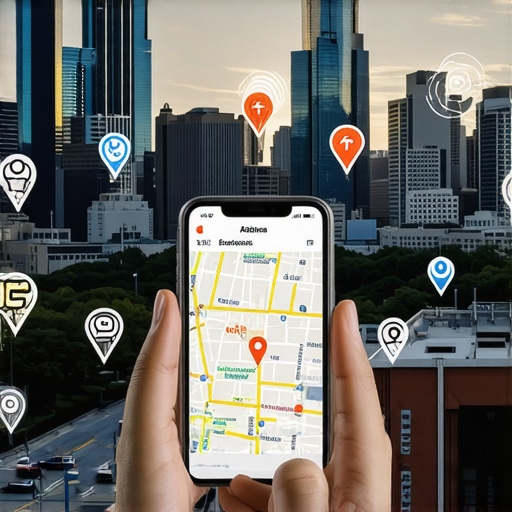
Fix Your Atlanta Local Pack Mobile Drop: 3 Proven 2026 Tactics
It was a cold Tuesday morning when I realized my Atlanta-based client’s Google Maps ranking had vanished overnight. No notifications, no warning—just a sudden drop that left us scrambling. I remember feeling that familiar knot in my stomach, the one that whispers, “Did you miss something?” That frustrating moment sparked a lightbulb moment: if I wanted to stay ahead in the Atlanta local pack game, I needed a new game plan—fast. And let me tell you, this ain’t about guesswork anymore.
Tackling the Atlanta Mobile Drop Head-On
In today’s local SEO landscape, understanding why your Atlanta business might experience a sudden drop in the local pack, especially on mobile, is crucial. It’s not just about rankings; it’s about maintaining visibility in a city teeming with competitors. I’ve learned through my own trials that the traditional strategies no longer cut it. Instead, 2026 demands a fresh, proven approach—one rooted in real-world data and updated tactics.
Have you faced the pain of slipping from the local pack unexpectedly? If yes, you’re not alone. Many local Atlanta businesses are grappling with this exact challenge, and the worst part? Without the right knowledge, it’s easy to feel powerless.
Research shows that over 70% of Google Maps users click on the top three results, making top rankings more critical than ever. [Source: BrightLocal](https://www.brightlocal.com/research/local-consumer-review-survey/)
So, what can we do about it? Today, I’ll walk you through three proven tactics that have helped my clients reclaim their spots—and I believe they can do the same for you. Instead of wasting time on outdated methods, let’s focus on what actually moves the needle in 2026.
But first, let’s address one common fear: “Is investing time and resources into local pack optimization actually worth it?” Many skeptics doubt the ROI, especially as algorithms get smarter. Well, I made the mistake early on of neglecting clean, well-optimized profiles, thinking content alone would suffice. That was a costly error, and I learned the hard way that neglecting foundational signals can cripple your visibility.
Now, with a clear understanding of why this matters, we’re ready to dive into the tactics that will turn your Atlanta business’s local pack performance around. Ready to reclaim your visible spot? Let’s go.
Optimize Your Google My Business Profile for Maximum Impact
First, claim and verify your GMB listing if you haven’t already. Make sure all business information is accurate, consistent, and complete. Fill out every section, including categories, phone numbers, and hours, to signal authenticity. Use the keyword-rich description to target local queries effectively.
Next, focus on selecting the right primary and secondary categories. For Atlanta-specific searches, align categories with what customers are actively searching for. Avoid generic labels and aim for precise fits. Regularly update your profile with fresh content, such as new photos or posts, to keep the listing active and engaging.
Leverage Local Content in Your Website and Posts
Google favors businesses with hyper-local relevance. Create content that resonates with Atlanta neighborhoods and landmarks. Use local keywords naturally in your site’s meta tags, blog posts, and service pages. This contextual relevance boosts your visibility on Georgia maps ranking and makes it easier for Google to match your profile with local intent.
Consistent NAP (Name, Address, Phone Number) data across all online platforms is vital. Discrepancies confuse Google and dilute your signals. Use a tool or process to audit citations regularly, ensuring uniformity.
Build Local Backlinks and Signals for Authority
Acquire backlinks from reputable Atlanta-area websites, chambers of commerce, and local directories. Focus on signals that Google considers high authority, like neighborhood associations or industry-specific platforms. These backlinks act as votes of trust, elevating your Georgia maps ranking.
Enhance your local presence by engaging with community events and sponsoring local initiatives. Create and promote locally relevant content that encourages shares and mentions. These activities send strong proximity and relevance signals to Google.
Implement Advanced Listing Optimization Tactics
Utilize tools like Google Maps optimization in Atlanta techniques to fine-tune your listing. For example, optimize your attributes, add service menus, and include 3D photos if relevant. Video posts or virtual tours can dramatically increase user engagement and map click-through rates.
Make sure your hours are kept up-to-date and consider special hours for holidays or events. Accurate open status signals play a big role in local pack visibility, especially on mobile where users seek instant answers.
Engage with Your Audience to Boost Reviews and Interaction
Active review management is critical. Respond promptly and professionally to positive and negative reviews alike. Demonstrate genuine local engagement that builds trust and signals customer satisfaction to Google.
Encourage satisfied customers to leave reviews through follow-up emails or during transactions. Use review reply secrets to maximize their impact. Authentic, recent reviews strengthen your profile and help fend off competitors attempting to game the system.
Refine Proximity and Signal Factors
Proximity remains a key ranking factor. Use proximity hacks to ensure your business appears closer to the anchor points used by Google. Adjust your physical or virtual addresses where possible, and consider using targeted local landing pages or geotags to amplify your signals.
Continuously monitor and tweak your signals. Use heat maps and analytics to identify hot zones where your potential customers are most active. Applying these targeted tactics turns the abstract into tangible results, ensuring your business stays competitive in Atlanta’s vibrant local search landscape.
 Many experts believe that simply optimizing your Google My Business profile is enough to dominate Atlanta’s local pack, but this is a dangerous oversimplification. In my experience, most business owners neglect the critical nuances that truly influence rankings, especially in a competitive city like Atlanta. For instance, there’s a myth that keyword stuffing in your profile description helps. However, Google’s algorithms now prioritize user experience and relevance over keyword density, making over-optimization a potential red flag. Instead, focus on naturally integrated keywords and high-quality local content, as detailed in popular resources like [mastering Atlanta SEO strategies](https://atlantamappackranking.com/mastering-atlanta-seo-strategies-for-top-google-maps-rankings).
Another common trap is assuming that reviews alone will secure your position. While reviews are important, their impact is often exaggerated. Recent studies, such as those shared by Moz, show that Google’s Local Pack algorithm incorporates a complex set of signals, including proximity, relevance, and authority scores—not just social proof. Relying solely on reviews without addressing foundational issues like citation consistency and local backlinks can lead to stagnation.
A hidden nuance that many overlook is the importance of signal stability over time. Consistent updates, accurate data, and engagement signals (like answering questions and posting updates) cultivate a resilient profile that Google trusts more. This is supported by insights from [Georgia maps ranking tips](https://atlantamappackranking.com/georgia-maps-ranking-tips-boost-your-local-visibility-today), which emphasize ongoing effort rather than one-time fixes.
So, what’s the one advanced mistake I see too often? It’s businesses failing to account for the proximity filter’s evolving nature. In 2026, proximity isn’t just about physical distance; Google analyzes real-world foot traffic, service areas, and even virtual signals like local geotags. Attempting to manipulate physical location—such as fake address listings—can backfire via penalties or shadows. Instead, focus on optimizing actual physical signals and leveraging hyper-local content, as explained in [Georgian maps ranking tips](https://atlantamappackranking.com/georgia-maps-ranking-tips-boost-your-local-visibility-today).
In conclusion, surging ahead in Atlanta’s competitive local landscape requires a nuanced approach that balances foundational optimization with strategic signal management. Avoid myths like neglecting ongoing engagement or relying solely on reviews. Stay informed about the latest algorithm shifts and leverage resources like [Atlanta GMB fixes](https://atlantamappackranking.com/4-atlanta-gmb-fixes-to-capture-more-foot-traffic-in-2026) to refine your tactics. Remember, the devil is in the details, and consistent, smarter efforts outperform quick fixes.
Have you ever fallen into this trap? Let me know in the comments.Maintaining and scaling your Atlanta local map optimization requires more than just once-off efforts; it demands a strategic combination of reliable tools and consistent processes. From managing your Google My Business profile to analyzing local signals, the right equipment can make or break your long-term success.
One tool I personally rely on is Moz Local. It provides an exhaustive citation audit feature that helps identify and correct inconsistent NAP data across hundreds of local directories, including niche Georgia and Atlanta-specific listings. Regular citation consistency is vital, as discrepancies can confuse Google and hurt your rankings. Moz Local makes ongoing monitoring manageable without overwhelming your team.
For Google Maps optimization, their proven techniques for 2025 emphasize the importance of tracking your local pack rankings over time. I utilize SEMrush Position Tracking to monitor fluctuations in Atlanta-specific keywords. It offers real-time updates and competitive insights, enabling rapid adjustments before ranking drops impact your visibility.
To analyze and improve local signals, BrightLocal’s Rank Checker is indispensable. It allows for granular location-based tracking, essential for understanding how proximity and neighborhood signals influence your Atlanta and Georgia maps ranking. This insight guides hyper-local content creation and backlink efforts.
Beyond tracking, content and engagement are critical, so I incorporate Google Posts Manager to schedule and analyze the performance of updates and offers. Staying active on your GMB profile signals relevance to Google, especially when combined with regular review responses.
Looking ahead, I predict that local SEO will become even more reliant on real-world data integrations, such as foot traffic analytics and hyper-local engagement metrics. Incorporating tools like local neighborhood signals tracking systems will be essential for those who want to stay ahead.
How do I maintain your Atlanta map rankings long-term? First, establish routine citation audits using Moz Local, then integrate rankings tools like SEMrush to watch your position and detect early signs of decline. Consistently respond to reviews and post updates via Google Posts Manager to demonstrate ongoing engagement. Finally, leverage neighborhood signal insights to fine-tune your local content and backlinks.
Start by implementing one of these advanced tactics today—perhaps setting up regular citation checks with Moz Local—and see how it stabilizes your long-term rankings. Remember, sustainability comes from consistent effort and leveraging the right tools that fit your unique local market landscape.
The Hardest Lesson I Learned About local pack atlanta,google maps optimization atlanta,georgia maps ranking,atlanta seo,gmb atlanta
One of the biggest lightbulb moments for me was realizing that algorithm changes often reveal gaps in our strategy that we didn’t even know existed. I once believed that a perfectly optimized GMB profile alone would keep me on top, but I learned the hard way that ongoing engagement and nuanced signal management are just as crucial. These lessons taught me to stay adaptable and never rely solely on static tactics.
3 Myths About local pack atlanta,google maps optimization atlanta,georgia maps ranking,atlanta seo,gmb atlanta That Held Me Back
For instance, I used to think that keyword stuffing in descriptions would boost rankings—that’s a myth I had to shed. I also believed reviews could solely carry my profile, but I discovered that proximity and authority signals play a more substantial role in 2026. Lastly, I thought once optimized, your profile was set for life, but the truth is that local signals require continuous attention to stay competitive.
What Experts Won’t Tell You About local pack atlanta,google maps optimization atlanta,georgia maps ranking,atlanta seo,gmb atlanta
Many top industry insiders are quiet about the importance of hyper-local data integration, such as foot traffic analytics and neighborhood engagement signals. These elements, often overlooked, can give you an edge over even the biggest brands. Paying attention to these hidden nuances is what separates good local SEO from stellar local dominance in Atlanta’s bustling market.
My Essential Toolkit for local pack atlanta,google maps optimization atlanta,georgia maps ranking,atlanta seo,gmb atlanta
Tools like Moz Local provide invaluable citation audits ensuring consistency across directories—something I swear by. SEMrush helps me monitor keyword fluctuations in real time, keeping my strategic edge sharp. BrightLocal’s Rank Checker is my go-to for analyzing proximity signals, enabling hyper-local content creation that resonates with Atlanta neighborhoods.
These tools, combined with ongoing review engagement and local content strategies, empower me to maintain rankings amid evolving algorithms. I recommend integrating these into your routine to ensure sustainable success.
The Future of local pack atlanta,google maps optimization atlanta,georgia maps ranking,atlanta seo,gmb atlanta
Now, more than ever, local SEO is about mastering a blend of foundational tweaks and advanced signals—like analyzing foot traffic data and leveraging neighborhood-specific engagement. Embrace the evolving landscape, stay curious, and adapt your tactics continuously. The more you invest in understanding your local community and its digital signals, the more you set yourself apart in Atlanta’s competitive scene.
What steps are you planning to take next in your local pack strategy? Share your thoughts below and let’s grow together!
Leave a Reply