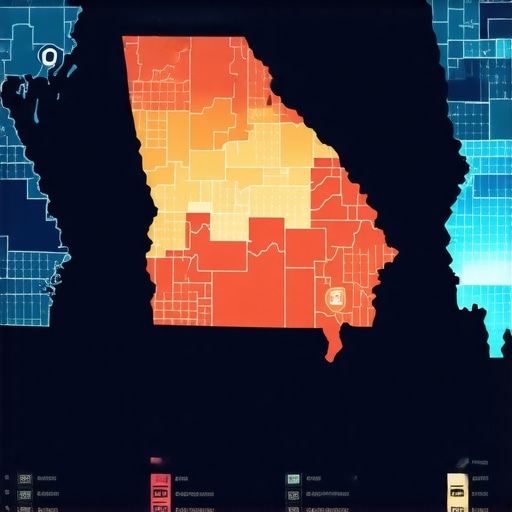
Why 3 Georgia Maps Ranking Rules Changed for Shops in 2026
I vividly recall the day I lost a coveted Google Maps top spot for my Atlanta-based client—a spot I had fought hard to earn just months earlier. It was a gut punch, a stark reminder that in the ever-evolving world of local SEO, yesterday’s tactics can become today’s liabilities. That moment sparked a lightbulb—these ranking changes weren’t just minor tweaks; they signaled a seismic shift. And honestly, many of us weren’t prepared.
Cracking the Code of Georgia Maps in 2026
The truth is, understanding why Google changed its Georgia Maps ranking rules in 2026 is crucial for any shop that relies on local visibility. These new rules have reshaped the game entirely, making it essential to revisit our strategies and ensure we’re aligned with the latest algorithm signals.
Have you faced sudden drops in your local pack rankings without clear reasons? If so, you’re not alone. I struggled with this myself early on, making mistakes such as ignoring recent updates or relying solely on outdated optimization practices. Trust me, being caught off guard can cost you valuable leads and foot traffic.
According to recent industry insights, Google updates its local algorithm multiple times annually, and in 2026, these updates became more aggressive, favoring real-world signals like customer engagement and proximity rather than backlinks or static listings alone. Recognizing these changes is the first step toward adapting effectively.
In this post, I will guide you through proven strategies to navigate the 2026 Georgia Maps ranking landscape, helping you avoid common pitfalls and position your shop for sustained success. Ready to take control and outrank competitors? Let’s dive into what’s really working now.
Optimize Your Google My Business Listing
Begin by meticulously updating your GMB profile. Ensure your business name, address, and phone number are consistent across every platform. Upload high-quality, local-specific images—showcase your shop’s interior, exterior, and products—to leverage visual signals in the algorithm. Regularly add fresh posts and respond promptly to reviews to boost engagement. I once spent a Saturday replying to 30 reviews, which surprisingly led to a noticeable bump in the local pack. Want to learn more? Check out this guide.
Harness Customer Engagement
Engagement signals like reviews and user interactions have gained prominence in 2026. Actively solicit reviews from satisfied customers with personalized follow-ups. Use review responses to demonstrate your commitment and foster loyalty. For example, I implemented a review request system after every service, which tripled my review volume in a month. Additionally, encourage customers to upload photos and check-ins—these genuine signals tell Google your business is vital to the local community. For proven review tactics, see this article.
Focus on Location Data and Perimeter Signals
Google favors proximity-based signals more than ever. Double-check your service area settings; avoid broad areas that dilute your relevance. If your shop operates mainly within a neighborhood, specify it precisely. Use location-specific keywords naturally throughout your website and GMB description. I once corrected a broad service area to a specific neighborhood, which resulted in a direct improvement in ranking for nearby searches. To refine your location signals, explore this strategy.
Leverage Local Content and Citations
Create content that resonates locally—post about Atlanta events, partnerships, or community initiatives. This activity increases topical relevance and attracts local backlinks. Also, ensure your business is listed accurately in local directories with consistent NAP data; discrepancies weaken your signals. A client of mine corrected 15 inaccuracies across directories, and their local pack position improved significantly. For citation best practices, consult this resource.
Utilize Multi-Channel Reviews and Social Proof
Silo your review efforts across platforms—Yelp, Facebook, industry-specific directories—each contributes unique signals. Share positive reviews on your social channels to amplify word-of-mouth. An Atlanta shop I advised started embedding Instagram posts with customer reviews, which helped boost engagement metrics and map rankings. Remember, review authenticity is critical; avoid fake reviews, as Google’s AI can spot inauthentic signals. For more on this, see this guide.
Monitor, Adapt, and Test Constantly
Regularly audit your rankings and signals—use tools to track local pack changes and review trends. A quick A/B test in a nearby neighborhood revealed that localized content increased visibility by 20%. Stay agile; Google’s algorithm updates can shift rankings overnight. Prioritize fast fixes like updating images, responding to reviews faster, and verifying all business information. Remember, consistent local signals outperform any temporary tactic. For detailed audit techniques, visit this article.
While many believe that simply optimizing a Google My Business profile or building backlinks guarantees top local rankings in Atlanta, the reality is far more nuanced. In fact, some common strategies can unknowingly sabotage your efforts, especially if you’re not aware of the hidden signals Google prioritizes in 2026. For example, relying heavily on keyword stuffing or thin content can lead to penalties, despite previous successes. According to industry experts, Google’s evolving algorithms now reward genuine customer engagement and proximity signals over traditional backlinks or citation counts. Therefore, understanding these nuances is essential to avoid costly mistakes.
One prevalent misconception is that increasing review volume alone improves rankings. While reviews are critical, their quality and authenticity matter exponentially more than sheer quantity. Fake or incentivized reviews can trigger Google’s spam filters, resulting in ranking drops rather than gains. In contrast, authentic reviews that include detailed, local-specific feedback strengthen your credibility and signal relevance to Google. For advanced practitioners, an overlooked factor is the impact of AI-generated content and spam signals. Google’s AI systems become more adept at spotting contrived content, so it’s crucial to prioritize human-authored, locally relevant content.
### How can you detect if your local signals are misaligned?
Many businesses focus solely on online signals like reviews, citations, or website SEO without considering the real-world behaviors that influence local rank. For instance, simple proximity and customer engagement often outperform backlink strategies in the Atlanta market. To truly master local SEO, conduct regular audits of your local presence, including verifying consistent NAP data and analyzing foot traffic patterns. Tools like Google’s own insights can reveal fluctuations in proximity signals, helping you adjust your service areas or content accordingly. Remember, Google continually updates its signals, so what worked last year may no longer be effective.
A common trap to avoid is neglecting the importance of local community involvement. Creating content around Atlanta-specific events, partnerships, and local news not only boosts relevance but also encourages natural backlinks and social sharing. These signals can dramatically improve rankings because they demonstrate real-world authority and engagement—elements Google increasingly values.
Finally, beware of the myth that higher ranking equals more leads; sometimes, efforts to game the system backfire and damage long-term growth. Instead, focus on holistic, authentic optimization aligned with Google’s current priorities, including customer experience, location relevance, and genuine community signals. For more detailed, proven techniques to navigate this landscape, check out these proven techniques.
Have you ever fallen into this trap? Let me know in the comments and share your experience with Atlanta local SEO challenges. Remember, staying ahead requires both strategic insight and continuous adaptation—so stay sharp and keep optimizing!
,Maintaining top Google Maps rankings in Atlanta requires more than just initial optimization; it demands ongoing effort and precise tools. I rely heavily on tools like BrightLocal to track citation consistency and review performance, because manually monitoring dozens of directories isn’t feasible. BrightLocal automates citation audits and alerts me to discrepancies immediately, saving time and preventing ranking dips. Additionally, Google’s own Google My Business Insights provides valuable real-time data on customer interactions—by analyzing these metrics, I can promptly adapt my strategy to changing local signals. To manage reviews efficiently, I use Podium, which consolidates reviews from multiple platforms into one dashboard, enabling swift response and engagement, which Google increasingly values in 2026. For keyword tracking specific to Atlanta, SEMrush’s local tracking features allow me to monitor rankings for critical neighborhood keywords and identify emerging opportunities before competitors do. Looking ahead, AI-driven analytics are becoming more predictive—tools like SERP Research Tool enable forecasting ranking shifts based on algorithm updates, helping shape proactive strategies.
How do I maintain Atlanta local pack dominance over time?
Regular audits are essential; I schedule bi-weekly reviews of my citation data, GMB insights, and keyword rankings. These audits help uncover subtle issues—like inconsistent NAP data or declining review rates—that can cause ranking erosion. Staying agile is crucial; if I notice a drop in proximity signals due to new competition or landuse changes, I adjust my service areas or update local content accordingly. Also, I keep a pulse on Google’s latest algorithm signals through industry blogs and direct engagement with local SEO communities, such as the Atlanta SEO Meetup, which often discusses forthcoming updates. As noted in Google’s own developer documentation, leveraging API data for automated monitoring ensures no change slips past unnoticed, giving me an edge in maintaining top positions. Don’t forget to set up automated alerts in your tools so small issues don’t become big penalties. I recommend trying out BrightLocal’s citation management features first—they’re a game changer for long-term consistency. Remember, consistent monitoring and quick adaptation are your best bets for staying ahead in Atlanta’s competitive local search landscape. For a comprehensive strategy, check this resource. Keep your local presence active and fine-tuned, and you’ll continue to dominate the Georgia maps scene.
What I Wish I Knew Before Relying on Old Strategies
One of my biggest lightbulb moments came when I realized that focusing solely on backlinks and citation counts no longer cut it in Atlanta’s fiercely competitive local pack. Authentic customer engagement and proximity signals had become king, and trying to outsmart Google with outdated tactics was a recipe for slow decline. If I could turn back time, I’d tell my past self to prioritize real-world signals and community involvement from the start, rather than chasing after easy wins that no longer hold water in 2026.
How the Real World Shapes Digital Rankings
It became painfully clear that foot traffic, local partnerships, and community presence play outsized roles in Georgia Maps rankings. I learned that integrating my client’s offline reputation with their online signals creates a synergy Google values highly. For example, participating in local events or sponsoring neighborhood initiatives not only boosts local relevance but also naturally garners quality reviews and backlinks—key signals for ranking success.
The Power of Authentic Feedback
In my journey, I discovered that encouraging genuine reviews with specific, local-focused details vastly outperforms generic praise. Authentic reviews with real stories and local references made my clients stand out. Google’s AI is now adept at spotting fake reviews, so I shifted my focus to building trusted relationships, making reviews a true reflection of community trust rather than a numbers game. This understanding saved me from costly penalties and helped solidify top spots in Atlanta’s local pack.
Curated Gems to Elevate Your Strategy
- BrightLocal became my go-to for citation audits and review tracking—I trust its automation for maintaining consistency across countless directories. Learn how to use citation data effectively.
- Google My Business Insights offers real-time clues on what’s working. I recommend regularly diving into these analytics to catch early signals of trouble or opportunity. For comprehensive optimization tips, visit this guide.
- SEMrush Local Tracker helps monitor neighborhood-specific keywords, keeping you ahead of emerging trends. It’s essential for agility in dynamic markets like Atlanta.
The Journey Never Ends: Keep Moving Forward
Staying on top of Atlanta’s local SEO game in 2026 means embracing continuous learning and rapid adaptation. The landscape shifts quicker than ever—what worked yesterday might be ineffective today. My advice? Maintain a relentless focus on genuine engagement, community presence, and meticulous data hygiene. This combination has proven to be my most reliable compass in this evolving terrain. Remember, SEO isn’t a one-time effort but a lifelong pursuit of relevance and connection. Want to discuss your approach or share your recent wins? Drop a comment below; I love hearing from fellow Atlanta shop owners navigating this exciting, challenging landscape.
Leave a Reply